Epilepsy Myths That Still Cost Patients Their Jobs, Marriages, and Confidence in Small-Town India
If you or someone you love has epilepsy, you already know that the seizures are not always the hardest part. The hardest part is often what people say after they find out.
In small towns and villages across India, epilepsy stigma quietly destroys lives — not because of the condition itself, but because of what people believe about it. Families hide diagnoses. Employers turn people away. Marriage proposals get cancelled overnight. And patients start believing they deserve none of it — the job, the relationship, the future.
This article is for patients living with epilepsy, their families, and anyone in a close-knit community who has heard something about seizures and is not sure what to believe anymore.
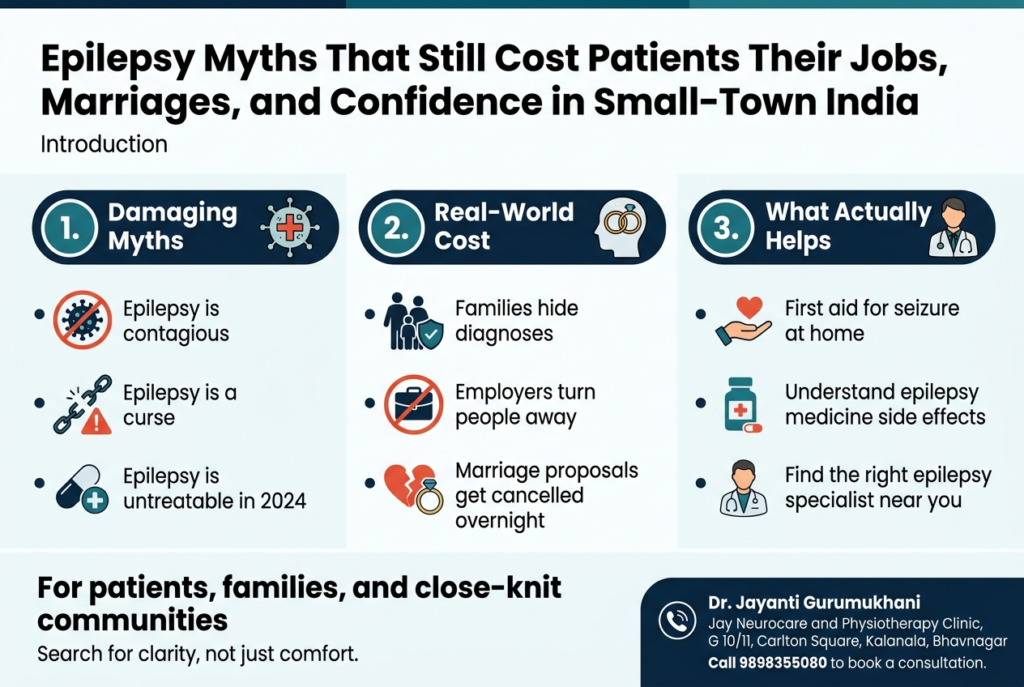
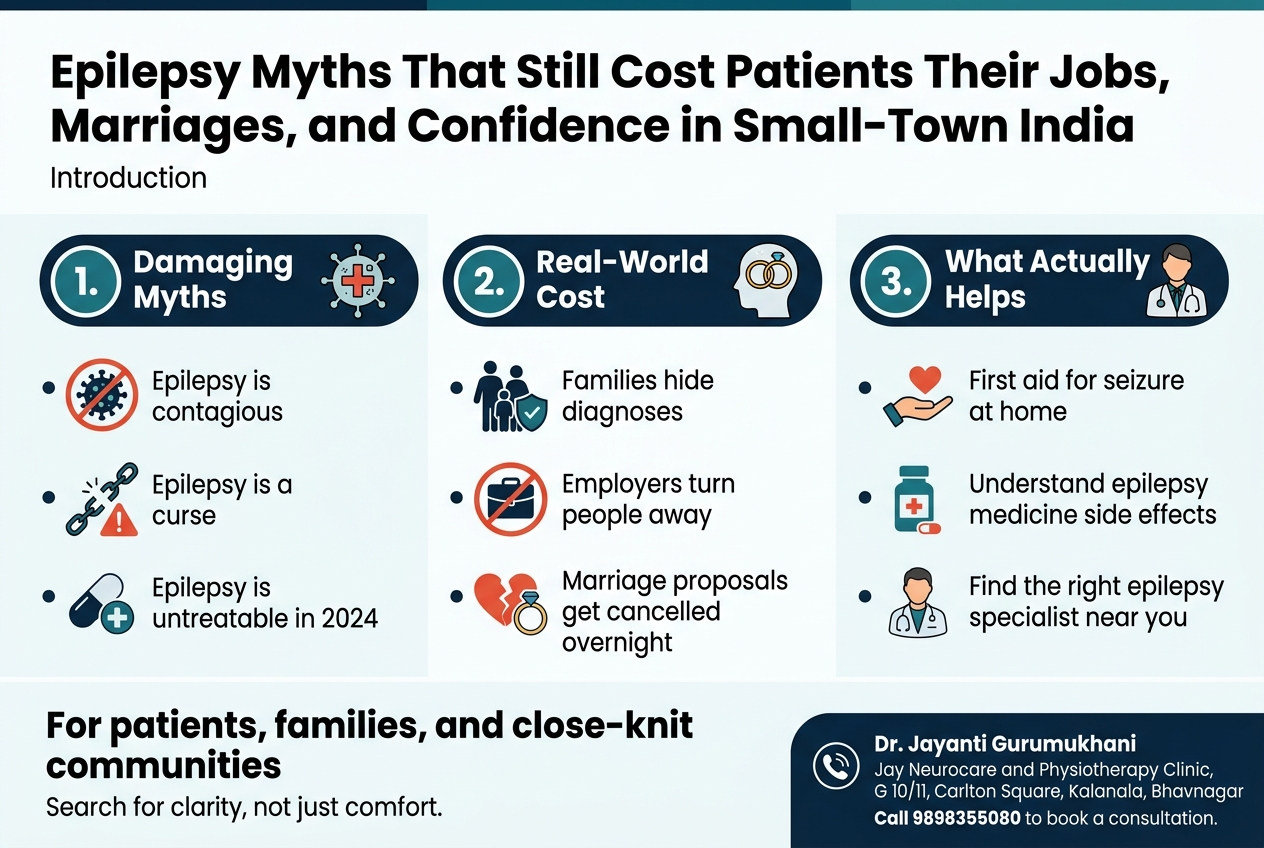
We are going to walk through three things that matter most right now:
- The most damaging epilepsy myths and facts — including why people still think epilepsy is contagious, a curse, or untreatable in 2026
- The real-world cost of those myths — how epilepsy job discrimination in India and broken marriages trace directly back to misinformation, not medicine
- What actually helps — from first aid for seizure at home to understanding epilepsy medicine side effects, and how the right epilepsy specialist near you can change everything
If you are searching for clarity, not just comfort — keep reading.
Dr. Jayanti Gurumukhani sees epilepsy patients at Jay Neurocare and Physiotherapy Clinic, G 10/11, Carlton Square, Kalanala, Bhavnagar. Call 9898355080 to book a consultation.
Understanding Epilepsy in the Context of Rural India
How Epilepsy Is Medically Defined Versus How It Is Culturally Perceived
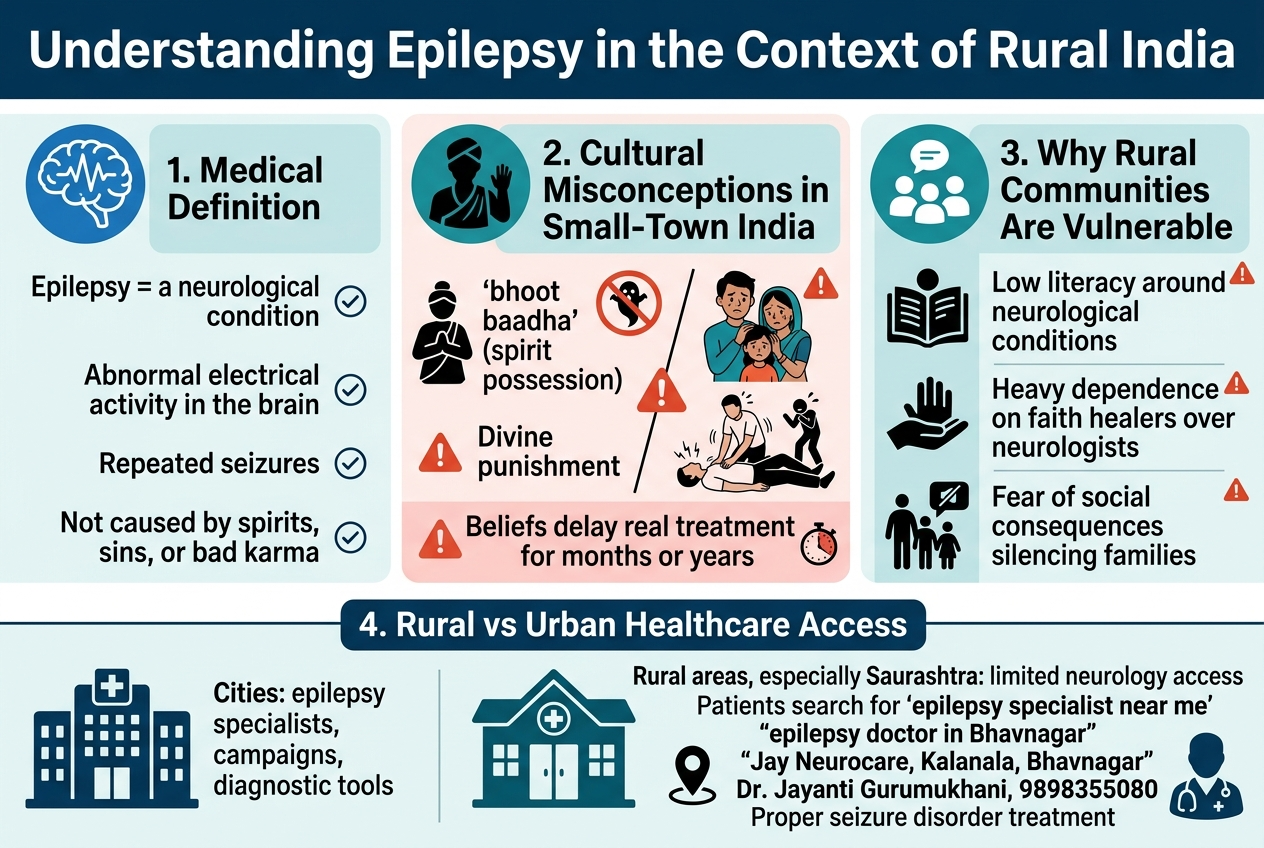
Medically, epilepsy is a neurological condition where abnormal electrical activity in the brain triggers repeated seizures. It has nothing to do with spirits, sins, or bad karma. Yet across small-town India, the same condition gets labeled as “bhoot baadha” (spirit possession) or divine punishment — beliefs that delay real treatment by months, sometimes years.
Why Small-Town Communities Remain Especially Vulnerable to Misinformation
Rural communities rely heavily on word-of-mouth, religious interpretation, and traditional healers as first responders to illness. Without access to reliable health education, epilepsy myths and facts never get sorted out. A single seizure witnessed in public can spiral into a lifetime of social exclusion before a doctor is ever consulted.
- Low literacy around neurological conditions
- Heavy dependence on faith healers over neurologists
- Fear of social consequences silencing families
The Gap Between Urban Healthcare Access and Rural Epilepsy Awareness
Cities have epilepsy specialists, awareness campaigns, and diagnostic tools. Rural areas — especially in regions like Saurashtra — often lack even basic neurology access. Patients searching for an epilepsy specialist near me or an epilepsy doctor in Bhavnagar may not know that clinics like Jay Neurocare, Kalanala, Bhavnagar (Dr. Jayanti Gurumukhani, 9898355080) exist and offer proper seizure disorder treatment.
Common Myths About Epilepsy That Fuel Discrimination
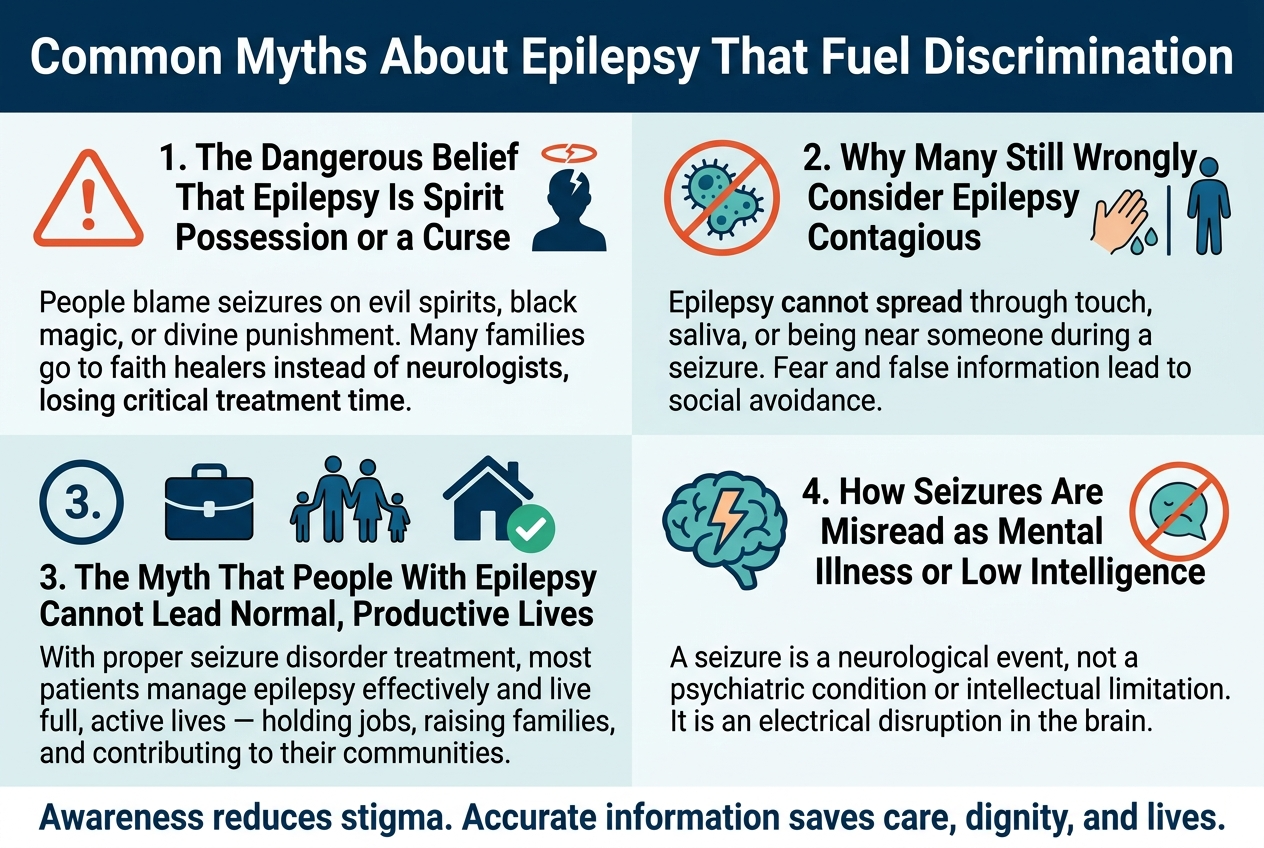
The Dangerous Belief That Epilepsy Is Spirit Possession or a Curse
Across small towns and villages, seizures are still blamed on evil spirits, black magic, or divine punishment. Families rush to faith healers instead of neurologists, losing critical treatment time. This epilepsy vs possession myth remains one of the deadliest barriers to care in rural India.
Why Many Still Wrongly Consider Epilepsy Contagious
A common question patients face is: is epilepsy contagious? The answer is absolutely not. Epilepsy cannot spread through touch, saliva, or being near someone during a seizure. Yet people avoid sharing meals, seating, or even conversation with epilepsy patients — driven entirely by fear built on false information.
The Myth That People With Epilepsy Cannot Lead Normal, Productive Lives
Many assume epilepsy means lifelong dependency. In reality, with proper seizure disorder treatment, most patients manage their condition effectively and live full, active lives — holding jobs, raising families, and contributing meaningfully to their communities.
How Seizures Are Misread as Mental Illness or Low Intelligence
Witnessing a seizure can be alarming, but it signals a neurological event — not a psychiatric condition or intellectual limitation. This misreading drives epilepsy job discrimination in India and crushes self-worth, when the real issue is simply an electrical disruption in the brain — nothing more.
The Real Cost of Myths on Employment Opportunities
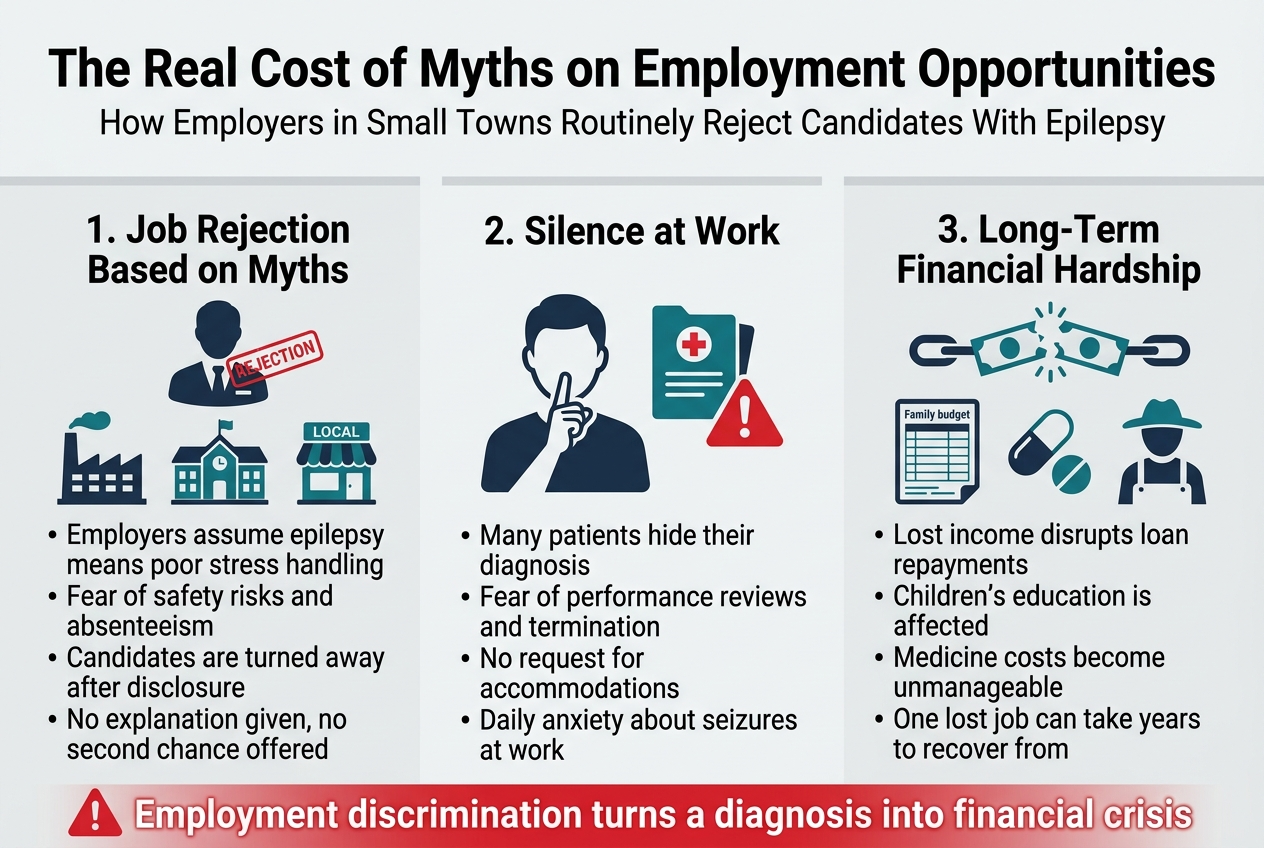
How Employers in Small Towns Routinely Reject Candidates With Epilepsy
Epilepsy job discrimination in India is shockingly common in smaller towns. Employers often assume a person with epilepsy cannot handle stress, operate safely, or show up consistently. A candidate who discloses their diagnosis during interviews is frequently turned away — no explanation given, no second chance offered. Factory owners, school managements, and even local shops quietly pass on these applicants, driven entirely by epilepsy myths and facts they’ve never bothered to verify.
The Silent Discrimination That Forces Patients to Hide Their Diagnosis at Work
Many patients choose silence over honesty — and who can blame them? Revealing a seizure disorder at work often triggers sudden “performance reviews,” reduced responsibilities, or outright termination. This forced secrecy creates constant anxiety. Patients can’t ask for accommodations they genuinely need, and they live in daily fear of having a seizure in front of colleagues who were never told the truth.
Why Epilepsy-Related Job Loss Creates Long-Term Financial Hardship for Families
The financial damage runs deep:
- Lost income disrupts loan repayments, children’s education, and basic household needs
- Families in agricultural or daily-wage setups have zero financial cushion
- Ongoing epilepsy medicine costs become unmanageable without steady employment
- One lost job often means years of recovery — or none at all
How Epilepsy Myths Destroy Marriages and Family Relationships
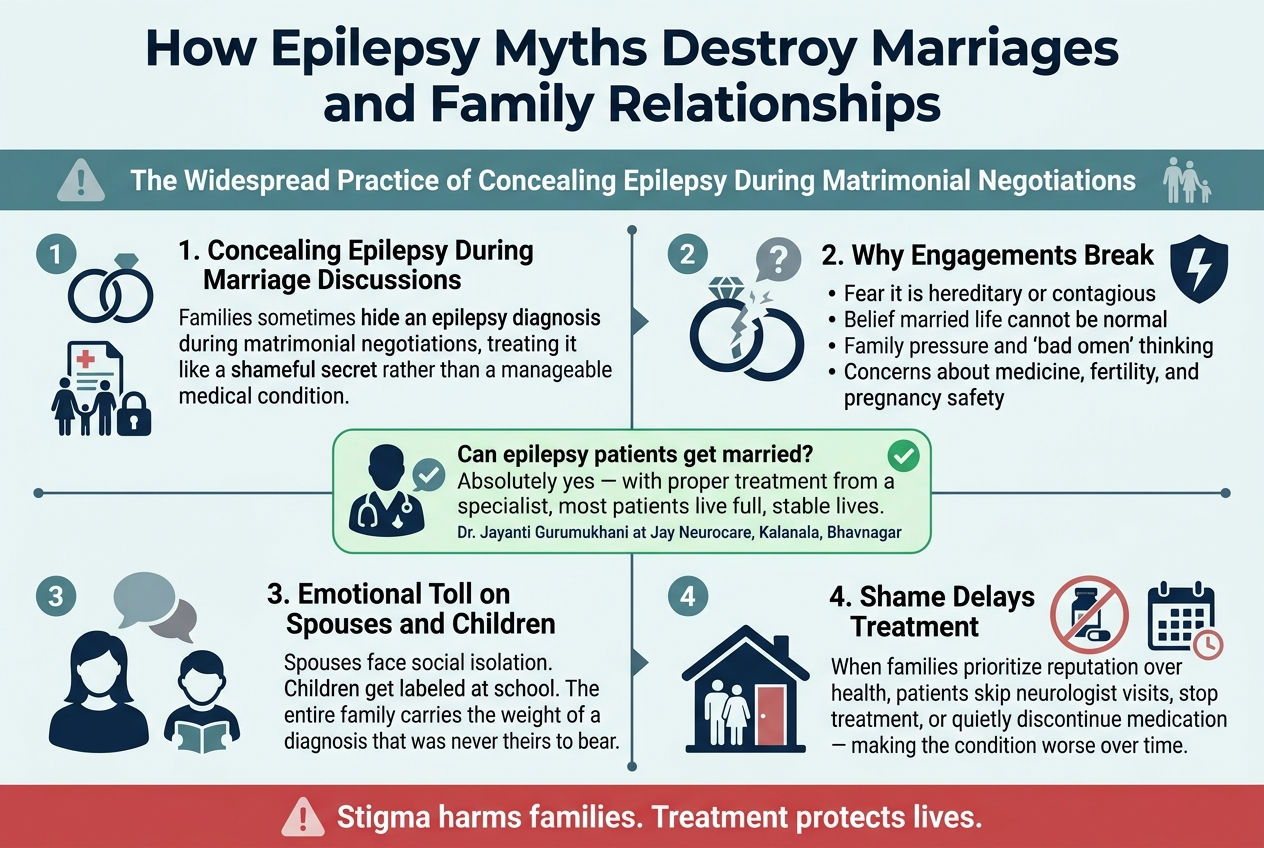
The Widespread Practice of Concealing Epilepsy During Matrimonial Negotiations
Families routinely hide an epilepsy diagnosis during marriage discussions, treating it like a shameful secret rather than a manageable medical condition. This concealment puts everyone at risk — the patient, the future spouse, and both families.
Why Epilepsy Diagnoses Frequently Lead to Broken Engagements and Divorces
Many engagements collapse the moment epilepsy is revealed. Common reasons include:
- Fear that epilepsy is hereditary or contagious (it is neither, in most cases)
- Belief that the patient cannot lead a “normal” married life
- Family pressure from the other side citing “bad omen”
- Concerns about epilepsy medicine side effects affecting fertility or pregnancy safety
Can epilepsy patients get married? Absolutely yes — with proper treatment from a specialist like Dr. Jayanti Gurumukhani at Jay Neurocare, Kalanala, Bhavnagar, most patients live full, stable lives.
The Emotional Toll on Spouses and Children Living With Stigma by Association
Spouses face social isolation. Children get labeled at school. The entire family carries the weight of a diagnosis that was never theirs to bear.
How Family Shame Prevents Patients From Seeking Proper Treatment
When families prioritize reputation over health, patients skip neurologist visits, stop seizure disorder treatment, or quietly discontinue medication — making their condition significantly worse over time.
The Collapse of Self-Confidence and Mental Health in Patients
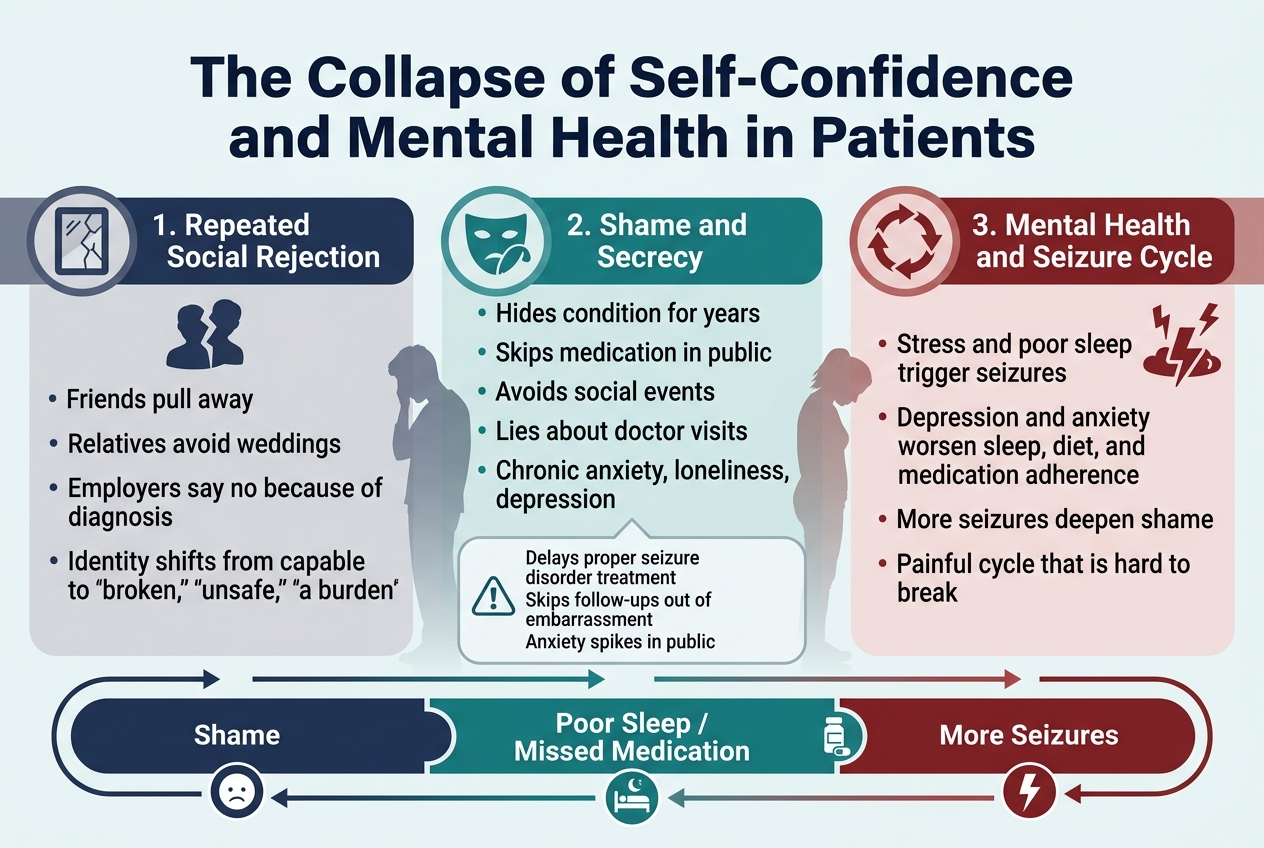
Why Repeated Social Rejection Deeply Damages a Patient’s Sense of Identity
When friends pull away, relatives avoid you at weddings, and employers turn you down — not because of your abilities but because of a diagnosis — something breaks inside. Epilepsy patients in small-town India often stop seeing themselves as capable people. Instead, they start seeing themselves through the eyes of everyone who rejected them: broken, unsafe, a burden.
This isn’t just sadness. It rewires how a person thinks about their own worth.
How Shame and Secrecy Worsen Depression and Anxiety in Epilepsy Patients
Many patients hide their condition for years — skipping medication in public, avoiding social events, lying about doctor visits. That constant hiding is exhausting. It creates chronic anxiety and deep loneliness. Epilepsy stigma in India pushes patients into silence that slowly becomes depression.
- Hiding the condition delays proper seizure disorder treatment
- Patients skip follow-ups out of embarrassment
- Anxiety spikes around situations where seizures might occur publicly
The Connection Between Poor Mental Health and Worsening Seizure Frequency
This is where myths become genuinely dangerous. Stress and poor sleep — both direct results of depression and anxiety — are well-known seizure triggers. A patient drowning in shame sleeps badly, eats poorly, and misses medication. Seizures increase. And more seizures deepen the shame. It becomes a painful cycle that’s very hard to break alone.
Correcting the Myths With Facts That Empower Patients
What Modern Neurology Actually Confirms About Epilepsy Causes and Management
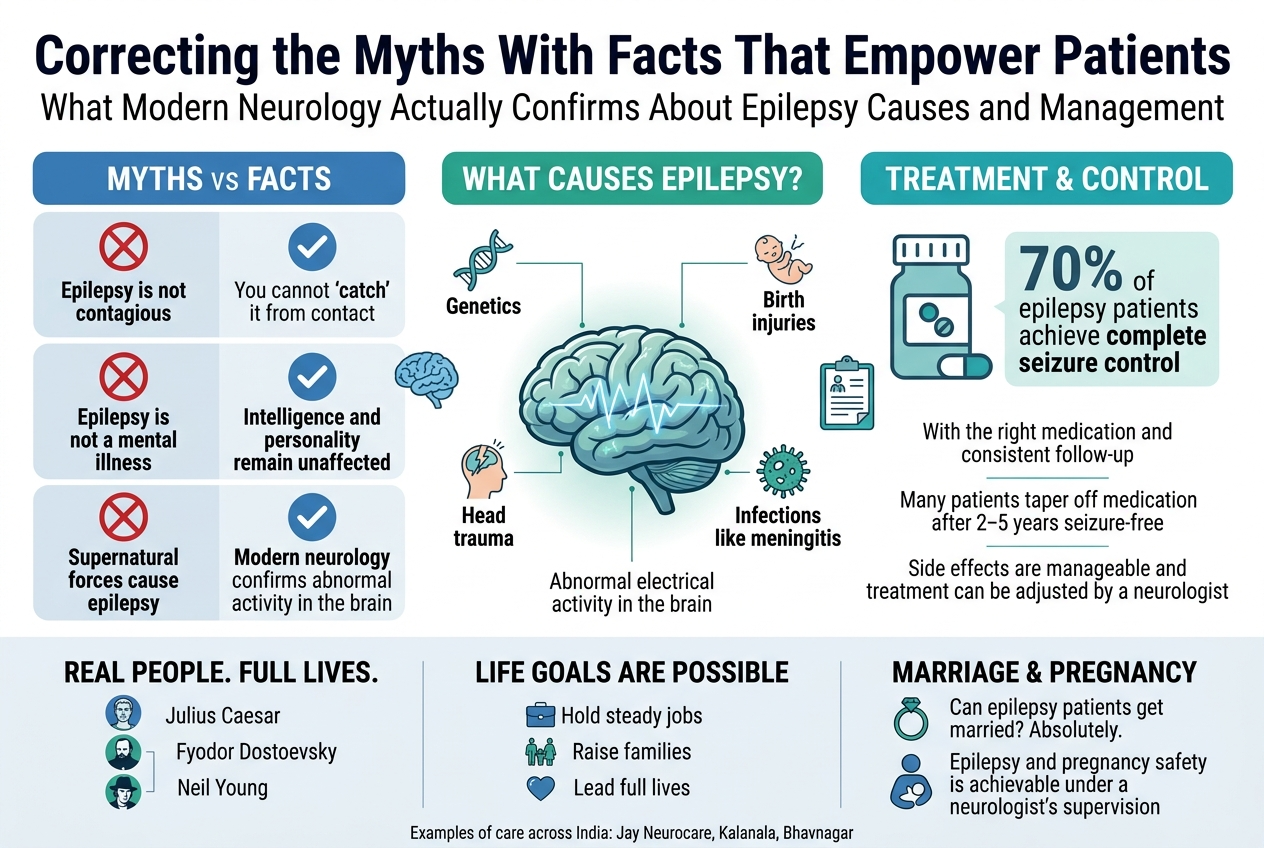
Epilepsy is a neurological condition — full stop. It has nothing to do with supernatural forces, past-life karma, or contagion. Modern neurology confirms it results from abnormal electrical activity in the brain, often linked to genetics, birth injuries, head trauma, or infections like meningitis.
- Epilepsy is not contagious — you cannot “catch” it from contact
- It is not a mental illness — intelligence and personality remain completely unaffected
- Seizure disorder treatment in India has advanced significantly, with multiple effective antiepileptic drugs now available
How Many Patients Successfully Control Seizures Through Consistent Medication
Around 70% of epilepsy patients achieve complete seizure control with the right medication and consistent follow-up. Many eventually taper off medication after remaining seizure-free for 2–5 years. Epilepsy medicine side effects are manageable and vary by individual — a good neurologist adjusts treatment accordingly.
Inspiring Real-Life Examples of People With Epilepsy Thriving
- Julius Caesar, Fyodor Dostoevsky, and Neil Young all lived with epilepsy
- Countless patients across India — including those treated at clinics like Jay Neurocare, Kalanala, Bhavnagar — hold steady jobs, raise families, and lead full lives
- Can epilepsy patients get married? Absolutely. With proper guidance, even epilepsy and pregnancy safety is achievable under a neurologist’s supervision
Community-Level Solutions to Break the Stigma
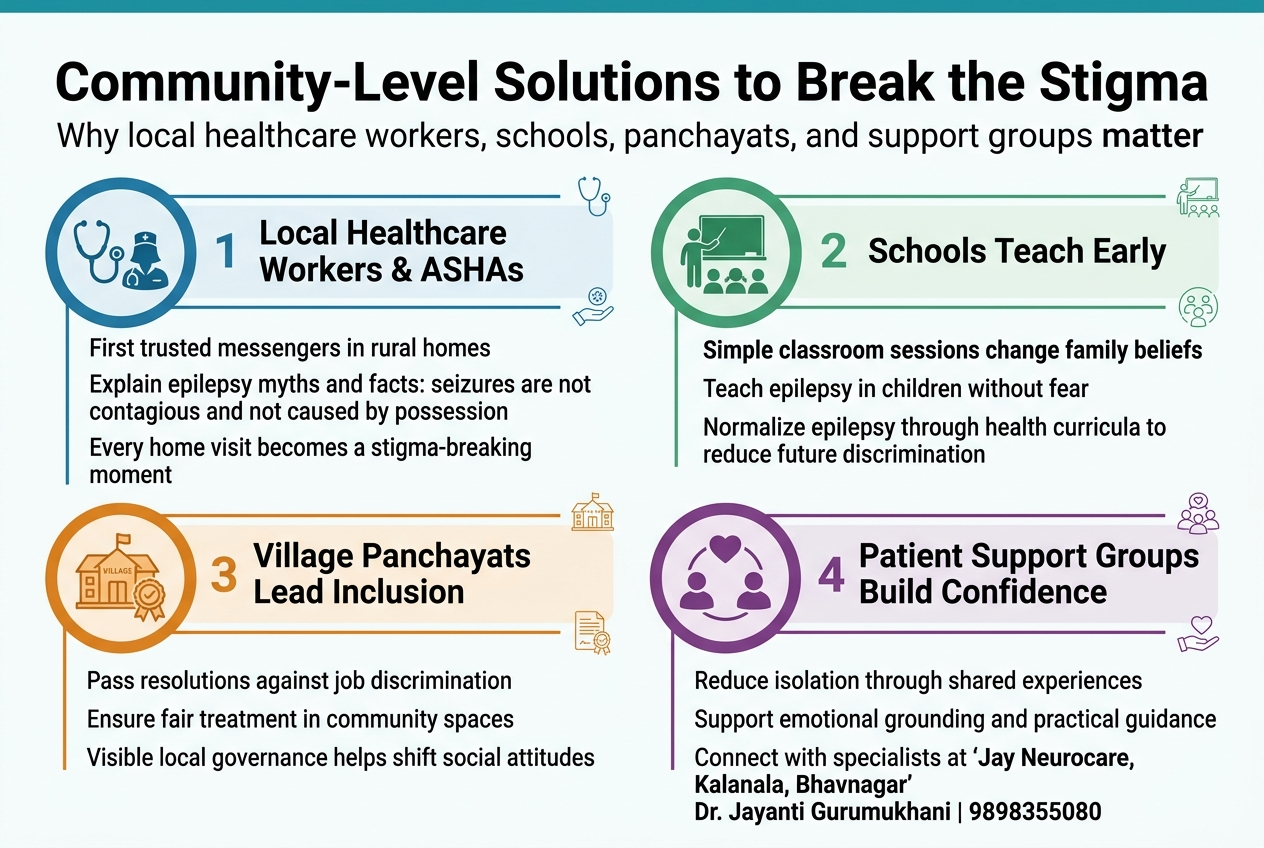
Why Local Healthcare Workers and ASHAs Are Critical Messengers for Change
ASHAs and frontline health workers are often the first medical face a rural family trusts. When they confidently explain epilepsy myths and facts — that seizures aren’t contagious, not caused by possession — families listen. Training these workers with accurate seizure disorder information turns every home visit into a small stigma-breaking moment.
How Schools Can Teach Children Early to Eliminate Generational Myths
Children carry beliefs home. A single classroom session explaining epilepsy in children myths — taught simply, without fear — can shift how entire families think. Schools that normalize epilepsy through health curricula raise adults who won’t discriminate in workplaces or marriages.
The Role of Village Panchayats in Creating Inclusive Policies
Panchayats can pass resolutions protecting epilepsy patients from job discrimination and ensuring fair treatment in community spaces. When local governance takes a visible stand, social attitudes follow.
How Patient Support Groups Rebuild Confidence and Community Belonging
Patients who connect with others managing epilepsy stop feeling isolated. Support groups — ideally linked to specialists like those at Jay Neurocare, Kalanala, Bhavnagar (Dr. Jayanti Gurumukhani, contact: 9898355080) — provide both emotional grounding and practical guidance on treatment, marriage concerns, and daily living.
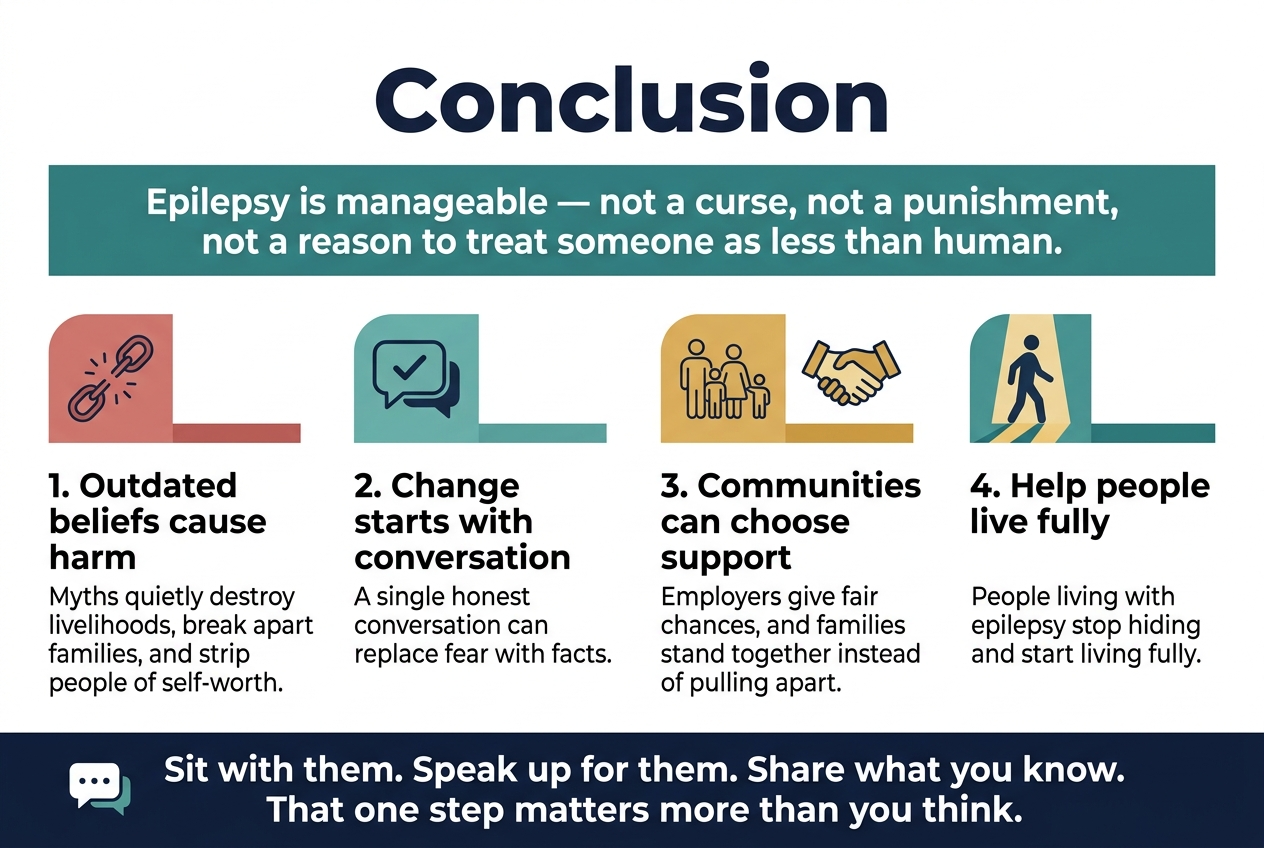
Epilepsy is a manageable medical condition, not a curse, a punishment, or a reason to treat someone as less than human. Yet in small-town India, outdated beliefs continue to quietly destroy livelihoods, break apart families, and strip people of their self-worth. The myths are powerful not because they are true, but because they go unchallenged for too long.
Change starts with a single honest conversation. When communities replace fear with facts, employers give fair chances, families stand together instead of pulling apart, and people living with epilepsy stop hiding and start living fully. If you know someone carrying this burden alone, sit with them, speak up for them, and share what you now know. That one step matters more than you think.