School and Epilepsy: A Guide for Parents and Teachers
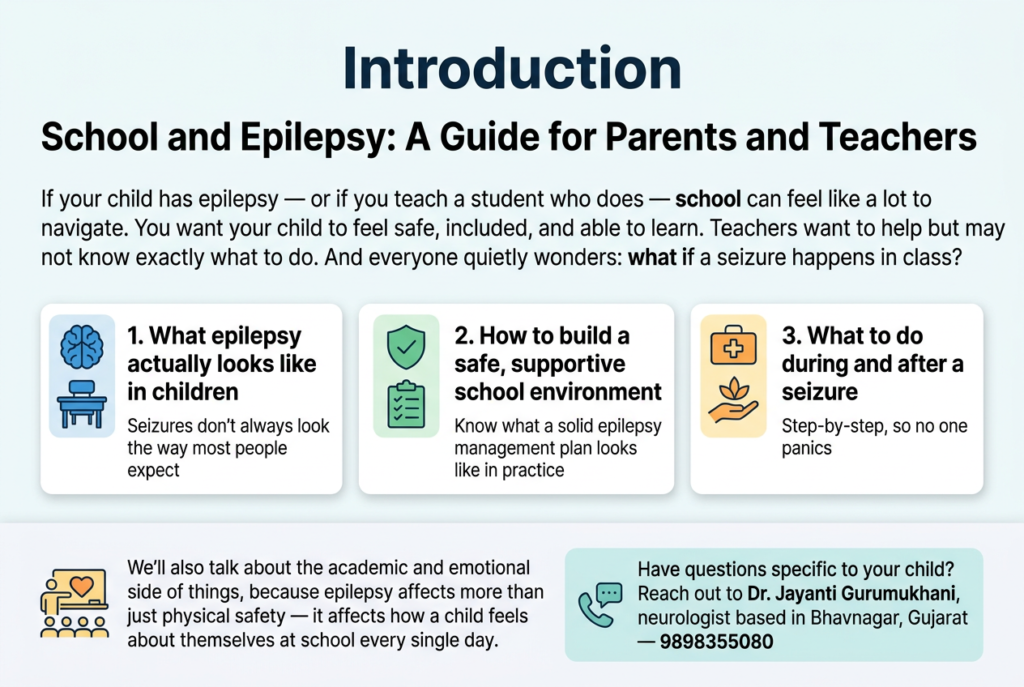
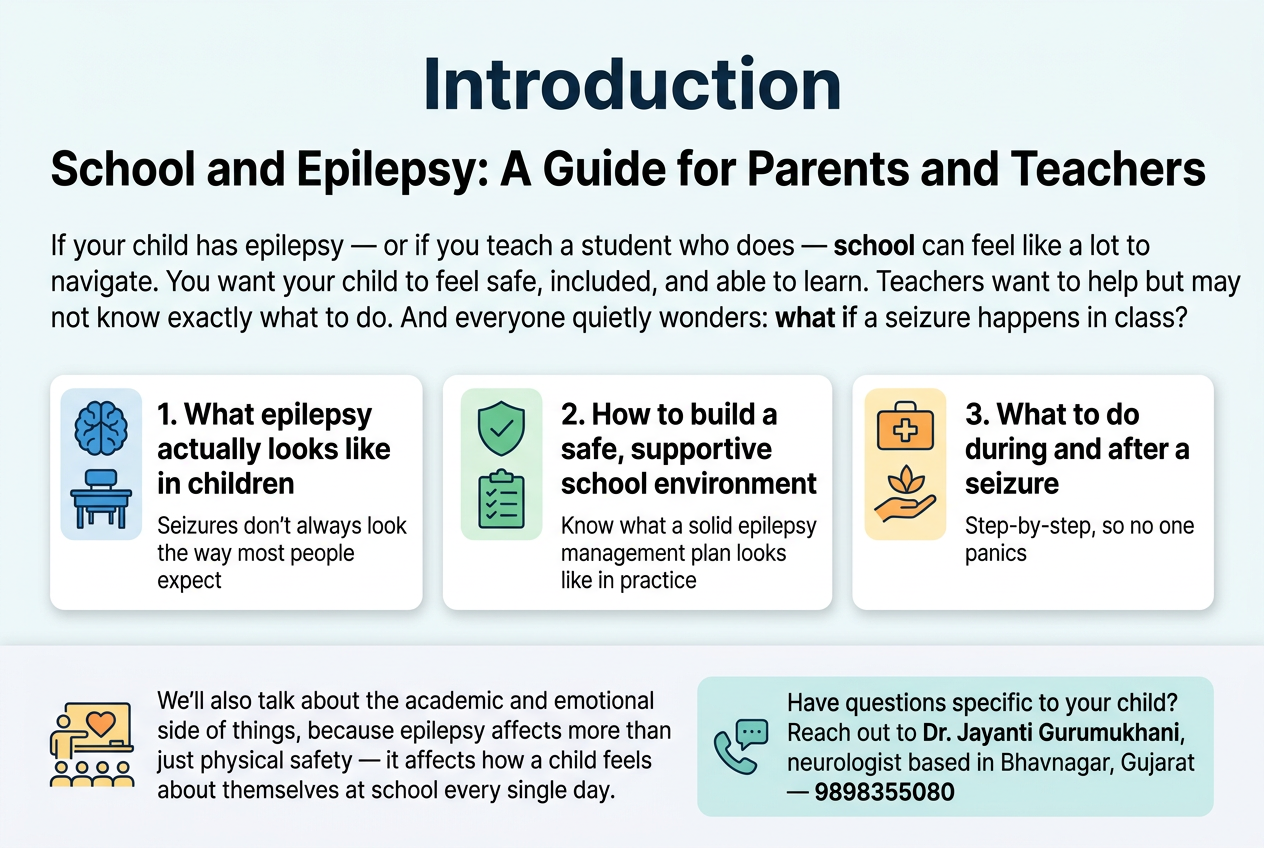
If your child has epilepsy — or if you teach a student who does — school can feel like a lot to navigate. You want your child to feel safe, included, and able to learn. Teachers want to help but may not know exactly what to do. And everyone quietly wonders: what if a seizure happens in class?
This guide is written for parents of school-age children with epilepsy and teachers who want to feel prepared and confident in the classroom. Whether your child was recently diagnosed or has been managing epilepsy for years, there’s always something useful to know about making school work better for them.
Here’s what we’ll walk through together:
- What epilepsy actually looks like in children — because seizures don’t always look the way most people expect
- How to build a safe, supportive school environment — including what a solid epilepsy management plan looks like in practice
- What to do during and after a seizure — step-by-step, so no one panics
We’ll also talk about the academic and emotional side of things, because epilepsy affects more than just physical safety — it affects how a child feels about themselves at school every single day.
Have questions specific to your child? Reach out to Dr. Jayanti Gurumukhani, neurologist based in Bhavnagar, Gujarat — 📞 9898355080
Understanding Epilepsy in School-Age Children
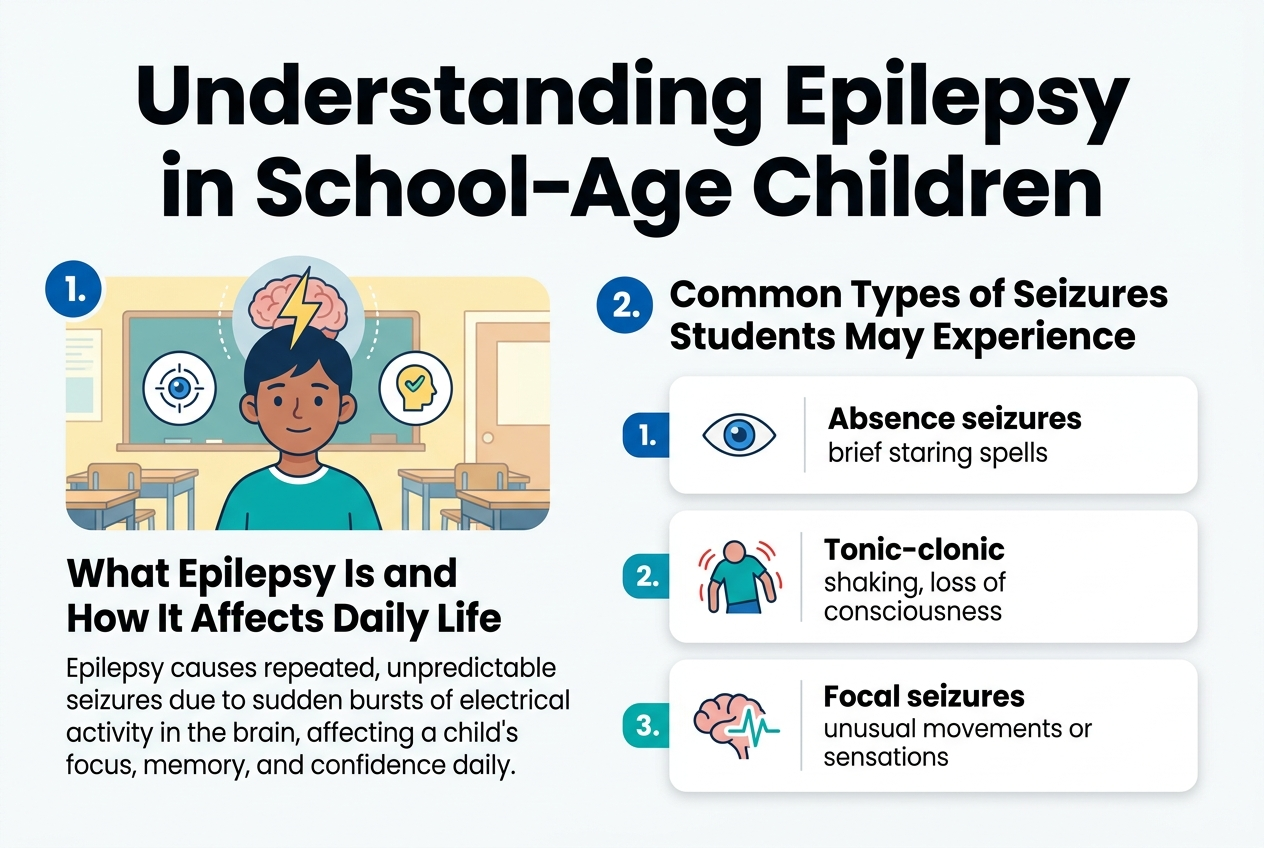
What Epilepsy Is and How It Affects Daily Life
Epilepsy causes repeated, unpredictable seizures due to sudden bursts of electrical activity in the brain, affecting a child’s focus, memory, and confidence daily.
Common Types of Seizures Students May Experience
- Absence seizures – brief staring spells
- Tonic-clonic – shaking, loss of consciousness
- Focal seizures – unusual movements or sensations
Creating a Safe and Supportive School Environment
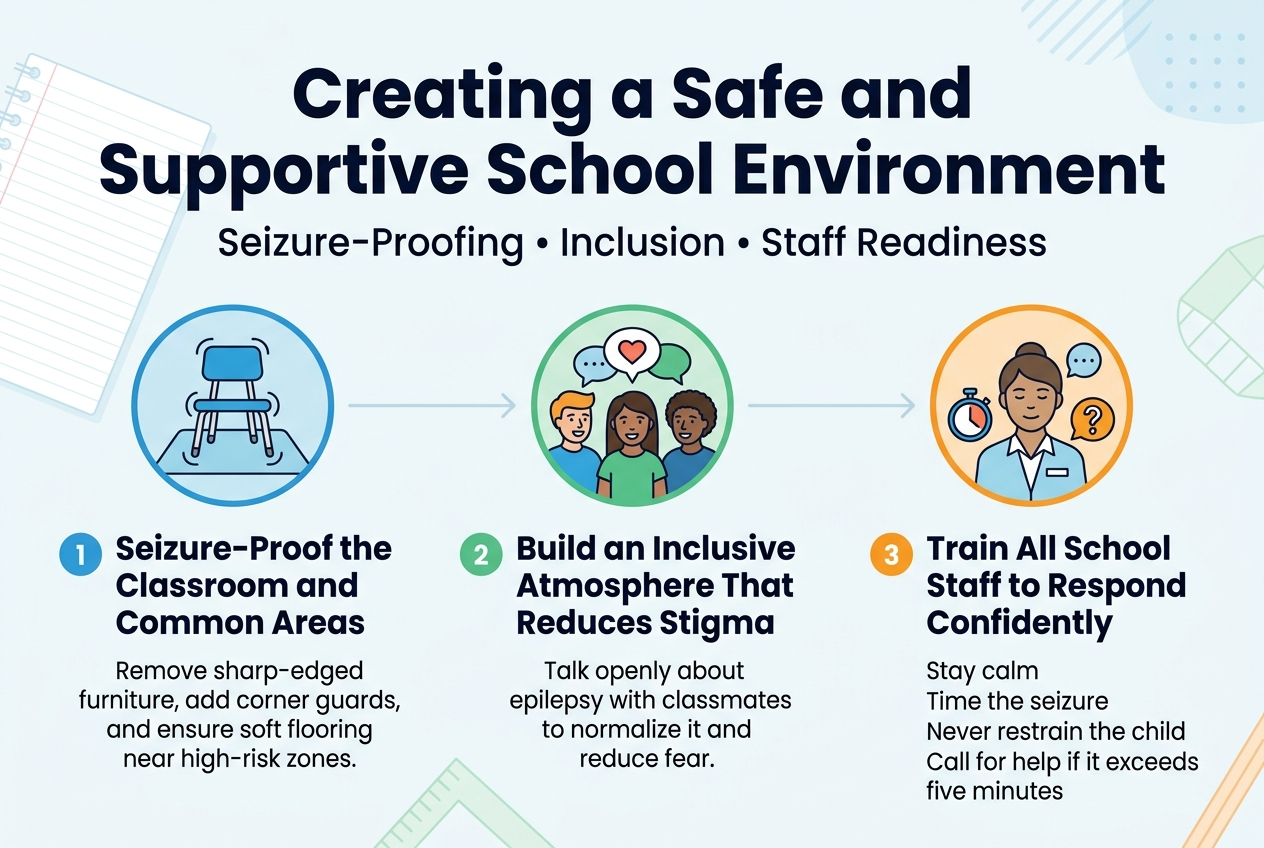
Steps to Seizure-Proof the Classroom and Common Areas
- Remove sharp-edged furniture, add corner guards, and ensure soft flooring near high-risk zones.
Building an Inclusive Atmosphere That Reduces Stigma
- Talk openly about epilepsy with classmates to normalize it and reduce fear.
Training All School Staff to Respond Confidently
- Every staff member should know basic seizure first aid — stay calm, time the seizure, never restrain the child, and call for help if it exceeds five minutes.
Developing an Effective Epilepsy Management Plan
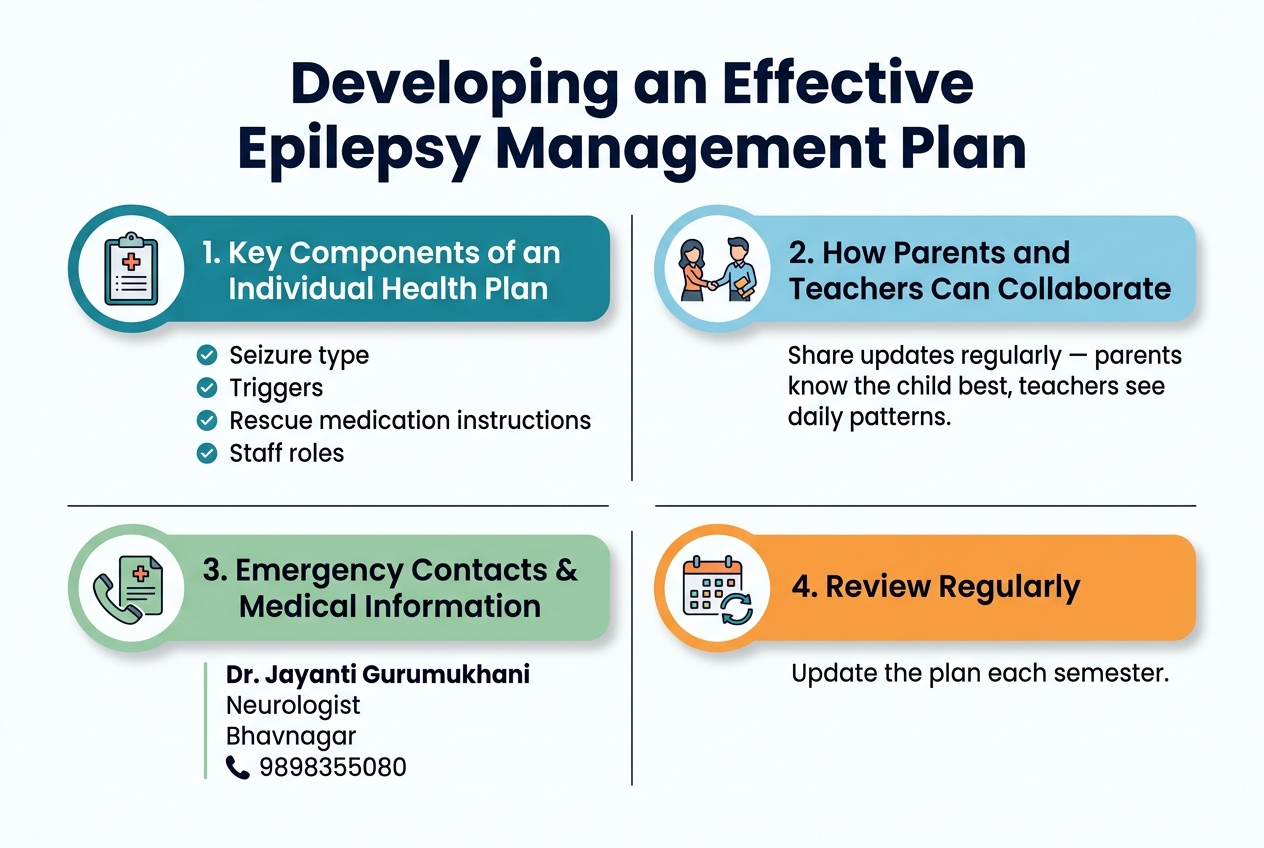
Key Components of an Individual Health Plan for Epilepsy
A good plan includes seizure type, triggers, rescue medication instructions, and staff roles.
How Parents and Teachers Can Collaborate
Share updates regularly — parents know the child best, teachers see daily patterns.
Emergency Contacts & Medical Information
Keep accessible records, including Dr. Jayanti Gurumukhani, Neurologist, Bhavnagar (📞 9898355080).
Review Regularly
Update the plan each semester.
What to Do During and After a Seizure
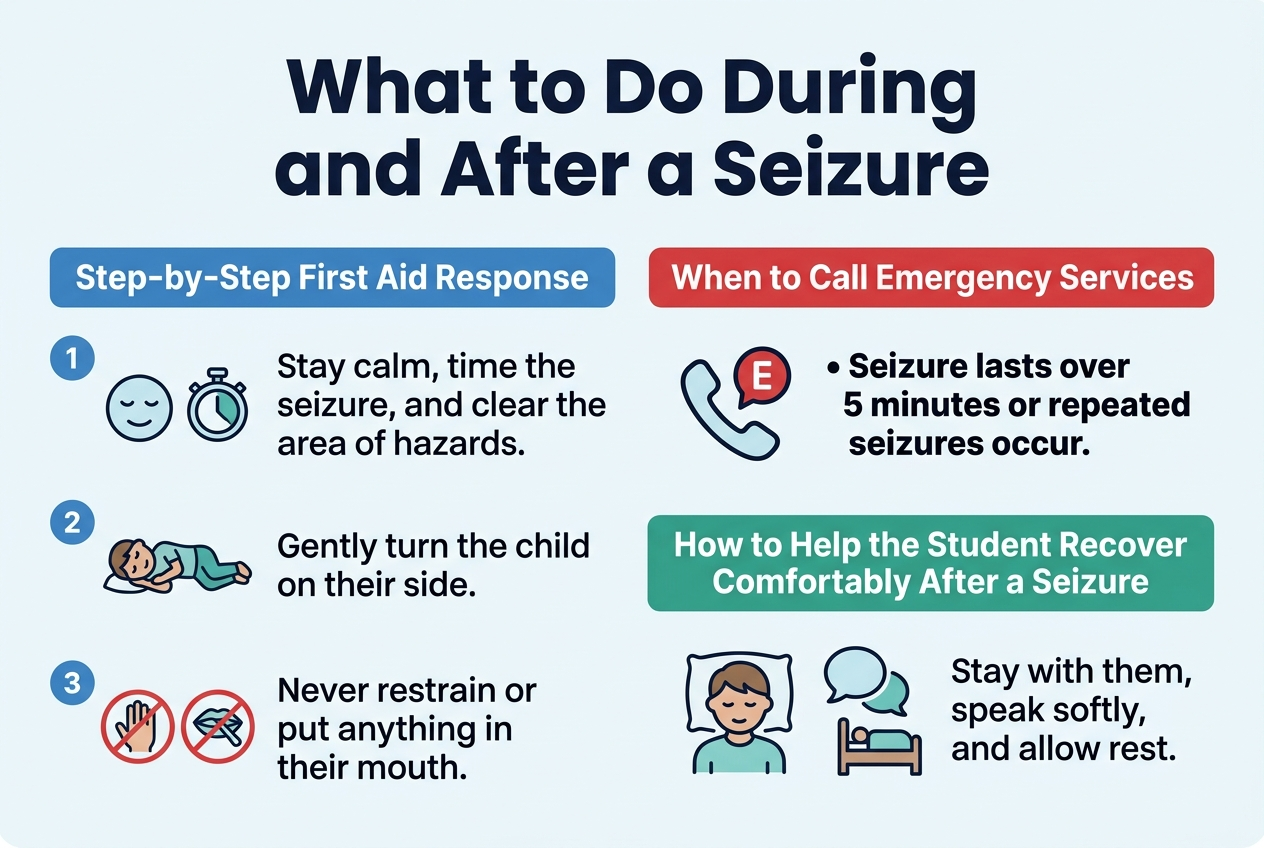
Step-by-Step First Aid Response for Seizures
- Stay calm, time the seizure, and clear the area of hazards.
- Gently turn the child on their side.
- Never restrain or put anything in their mouth.
When to Call Emergency Services
- Seizure lasts over 5 minutes or repeated seizures occur.
How to Help the Student Recover Comfortably After a Seizure
- Stay with them, speak softly, and allow rest.
Addressing the Academic Impact of Epilepsy
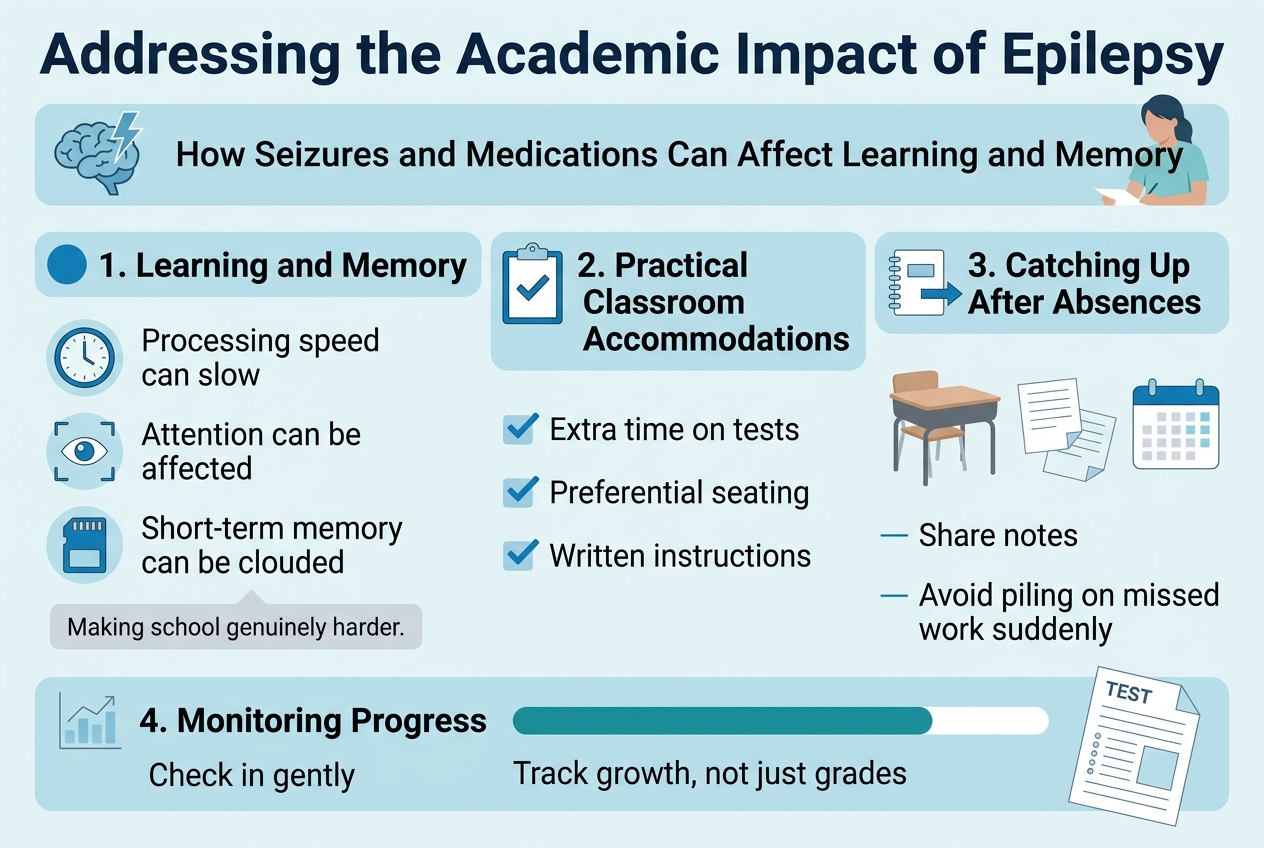
How Seizures and Medications Can Affect Learning and Memory
Seizures and anti-epileptic medications can slow processing speed, affect attention, and cloud short-term memory — making school genuinely harder.
Practical Classroom Accommodations
- Extra time on tests
- Preferential seating
- Written instructions
Catching Up After Absences
Share notes; avoid piling on missed work suddenly.
Monitoring Progress
Check in gently — track growth, not just grades.
Supporting the Emotional Well-Being of Students With Epilepsy
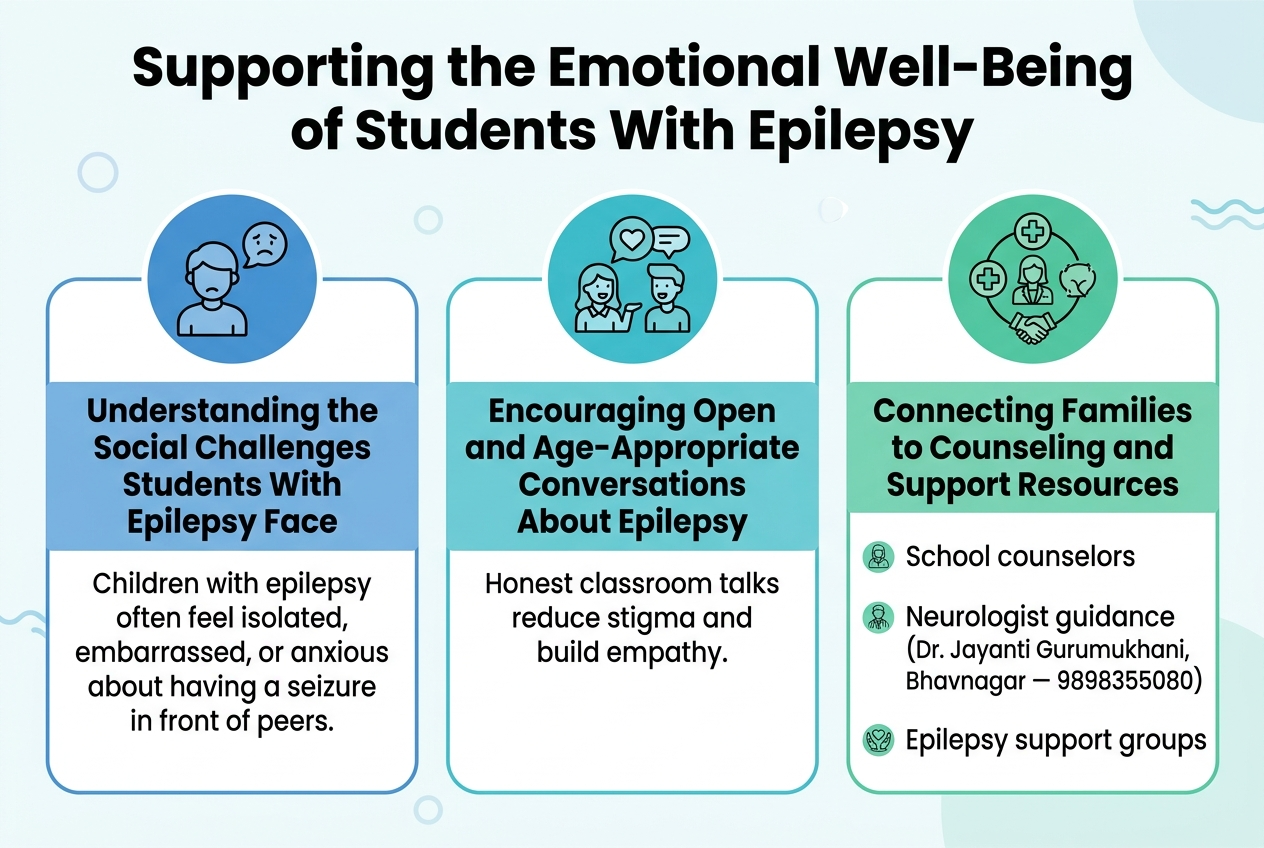
Understanding the Social Challenges Students With Epilepsy Face
Children with epilepsy often feel isolated, embarrassed, or anxious about having a seizure in front of peers.
Encouraging Open and Age-Appropriate Conversations About Epilepsy
Honest classroom talks reduce stigma and build empathy.
Connecting Families to Counseling and Support Resources
- School counselors
- Neurologist guidance (Dr. Jayanti Gurumukhani, Bhavnagar — 9898355080)
- Epilepsy support groups
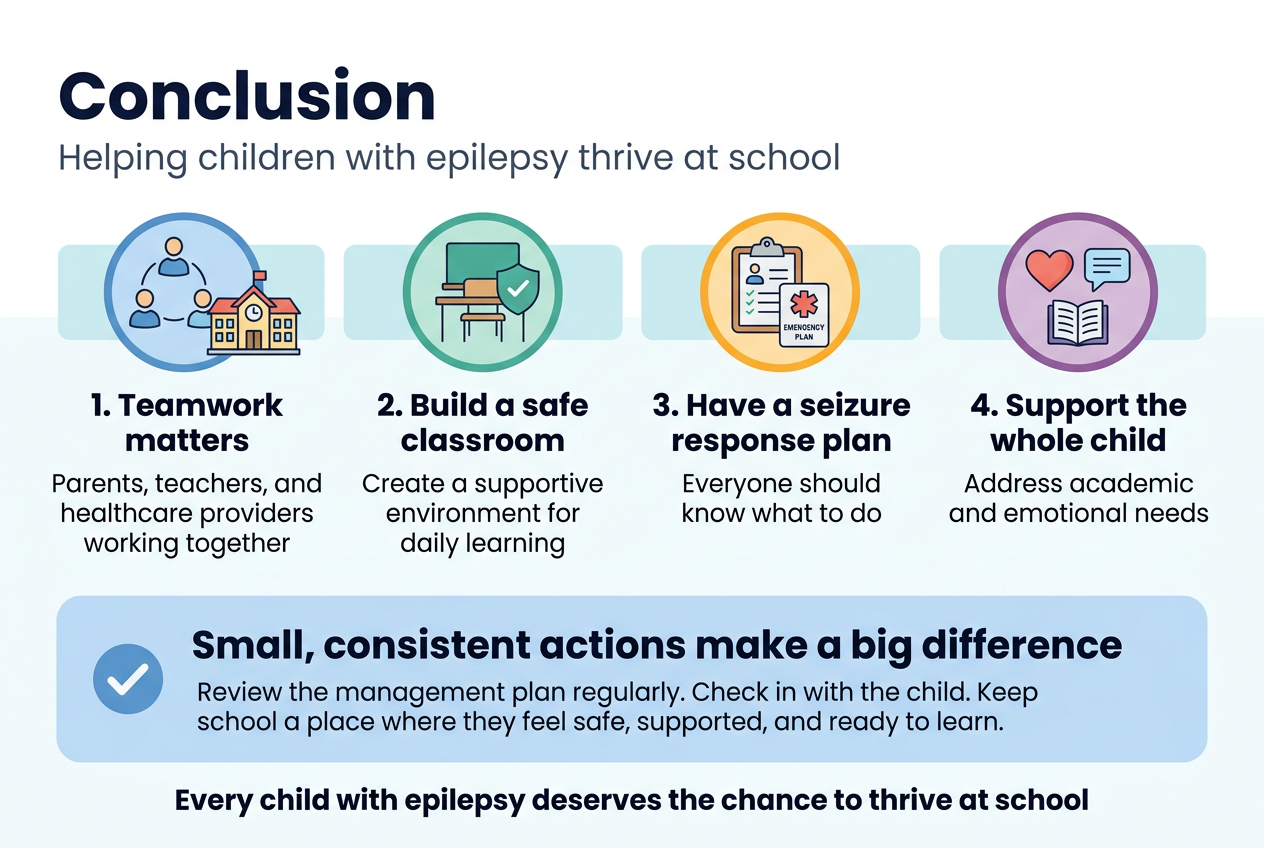
Managing epilepsy in a school setting takes teamwork between parents, teachers, and healthcare providers. From building a safe classroom environment to having a solid seizure response plan, every step you take makes a real difference in a child’s daily school experience. Knowing how to handle both the academic and emotional sides of epilepsy means students can feel supported, understood, and confident rather than isolated or left behind.
Every child with epilepsy deserves the chance to thrive at school, and that starts with the adults around them being informed and prepared. Take the time to connect with your school’s staff, review the management plan regularly, and check in with your child about how they’re feeling. Small, consistent actions from caring adults can turn school into a place where a child with epilepsy feels safe enough to focus on what matters most — learning and growing.