Why Does Vertigo Keep Coming Back? Common Reasons for Recurrent Attacks
You finally feel better after a vertigo episode — and then it hits again out of nowhere. If this sounds familiar, you’re not alone. Recurring vertigo is one of the most frustrating things to deal with, especially when you thought you had it under control.
This guide is for anyone who keeps getting hit with repeat dizziness and balance problems and wants real answers — not just a list of medical terms. Whether you’ve already been diagnosed with BPPV, a vestibular disorder, or you’re still trying to figure out what’s going on, this breakdown will help you connect the dots.
Here’s what we’ll walk through:
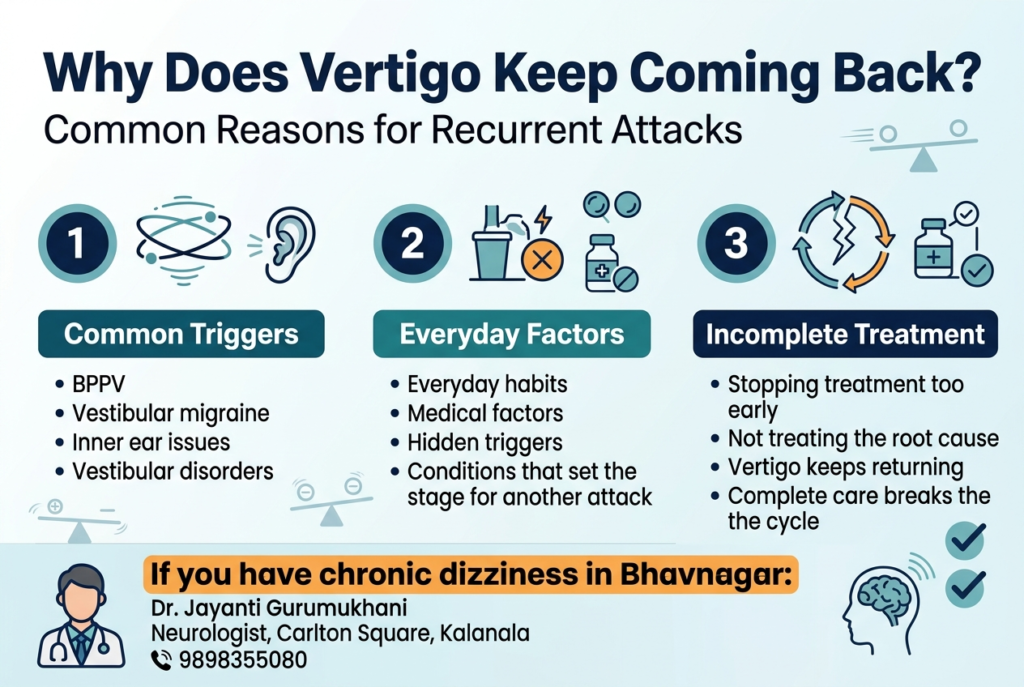
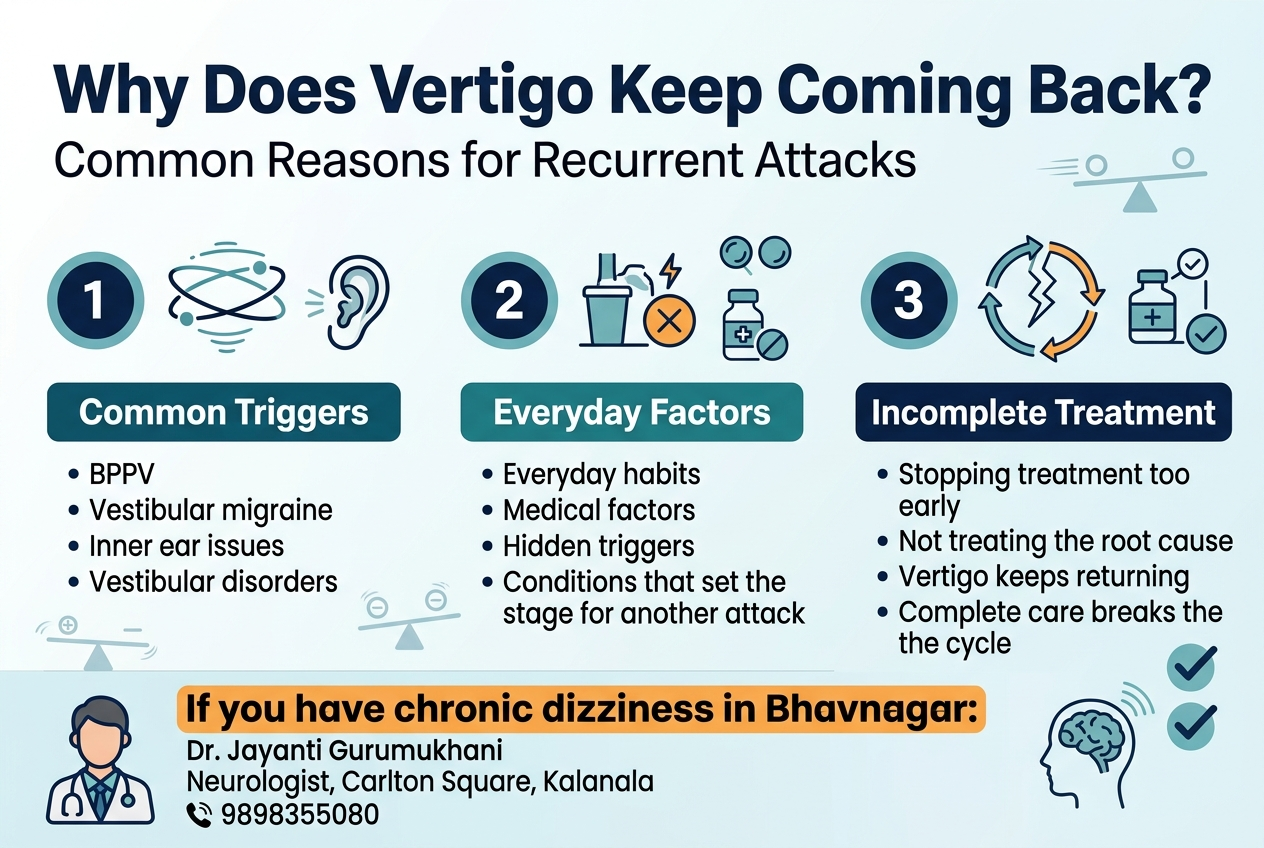
- The most common conditions — like BPPV, vestibular migraine, and inner ear issues — that keep triggering episodes
- Everyday habits and medical factors that quietly set the stage for another attack
- Why incomplete treatment is one of the biggest reasons vertigo keeps coming back — and what actually works to stop the cycle
If you’re in Bhavnagar and dealing with chronic dizziness, Dr. Jayanti Gurumukhani (Neurologist, Carlton Square, Kalanala — 📞 9898355080) can help you get to the root of it. Let’s start by understanding why vertigo returns in the first place.
Understanding Why Vertigo Returns
How Vertigo Differs from a One-Time Dizziness Episode
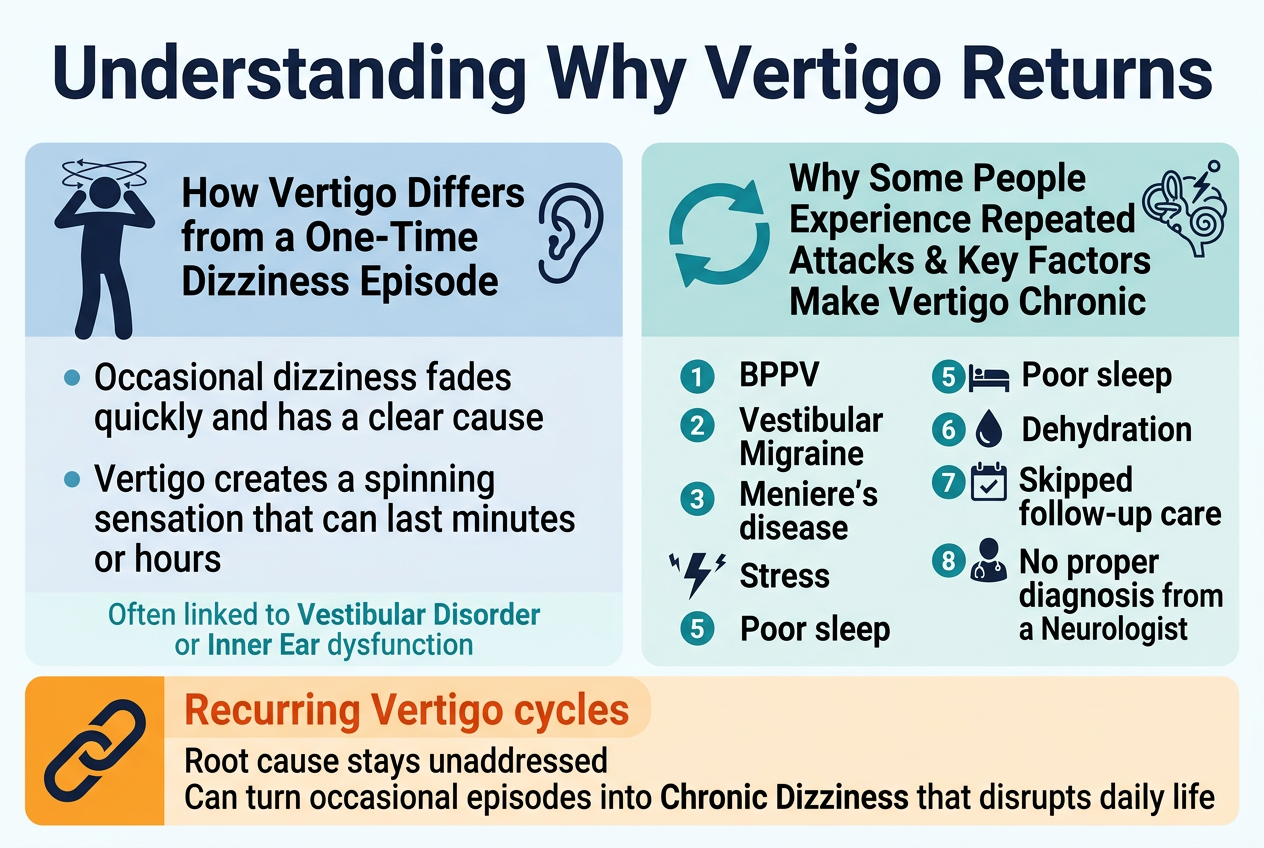
Occasional dizziness fades quickly and has a clear cause — like standing up too fast. #Vertigo is different. It creates a spinning sensation that can last minutes or hours, often linked to #VestibularDisorder or #InnerEar dysfunction. When it keeps coming back, your brain and balance system aren’t fully communicating correctly.
Why Some People Experience Repeated Attacks & Key Factors That Make Vertigo Chronic
Conditions like #BPPV, #VestibularMigraine, or Meniere’s disease are built for recurrence. Stress, poor sleep, dehydration, and skipped follow-up care push people into repeated #RecurringVertigo cycles. Without proper diagnosis from a #Neurologist, the root cause stays unaddressed, turning occasional episodes into #ChronicDizziness that disrupts daily life.
Most Common Conditions That Trigger Recurring Vertigo
A. Benign Paroxysmal Positional Vertigo and Its Tendency to Relapse
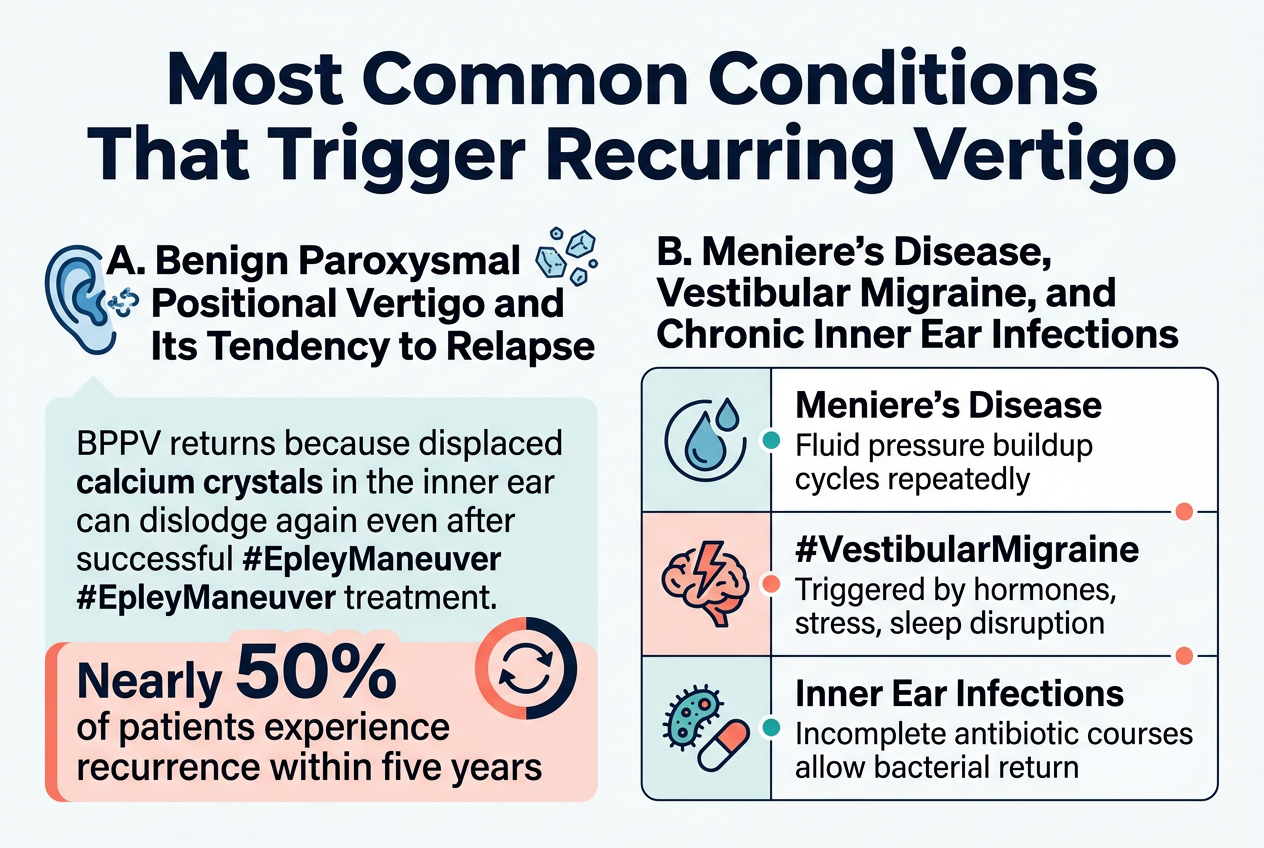
#BPPV returns because displaced calcium crystals in the inner ear can dislodge again even after successful #EpleyManeuver treatment. Studies show nearly 50% of patients experience recurrence within five years.
B. Meniere’s Disease, Vestibular Migraine, and Chronic Inner Ear Infections
| Condition | Why It Keeps Coming Back |
|---|---|
| Meniere’s Disease | Fluid pressure buildup cycles repeatedly |
| #VestibularMigraine | Triggered by hormones, stress, sleep disruption |
| Inner Ear Infections | Incomplete antibiotic courses allow bacterial return |
Lifestyle Habits That Fuel Repeat Vertigo Attacks
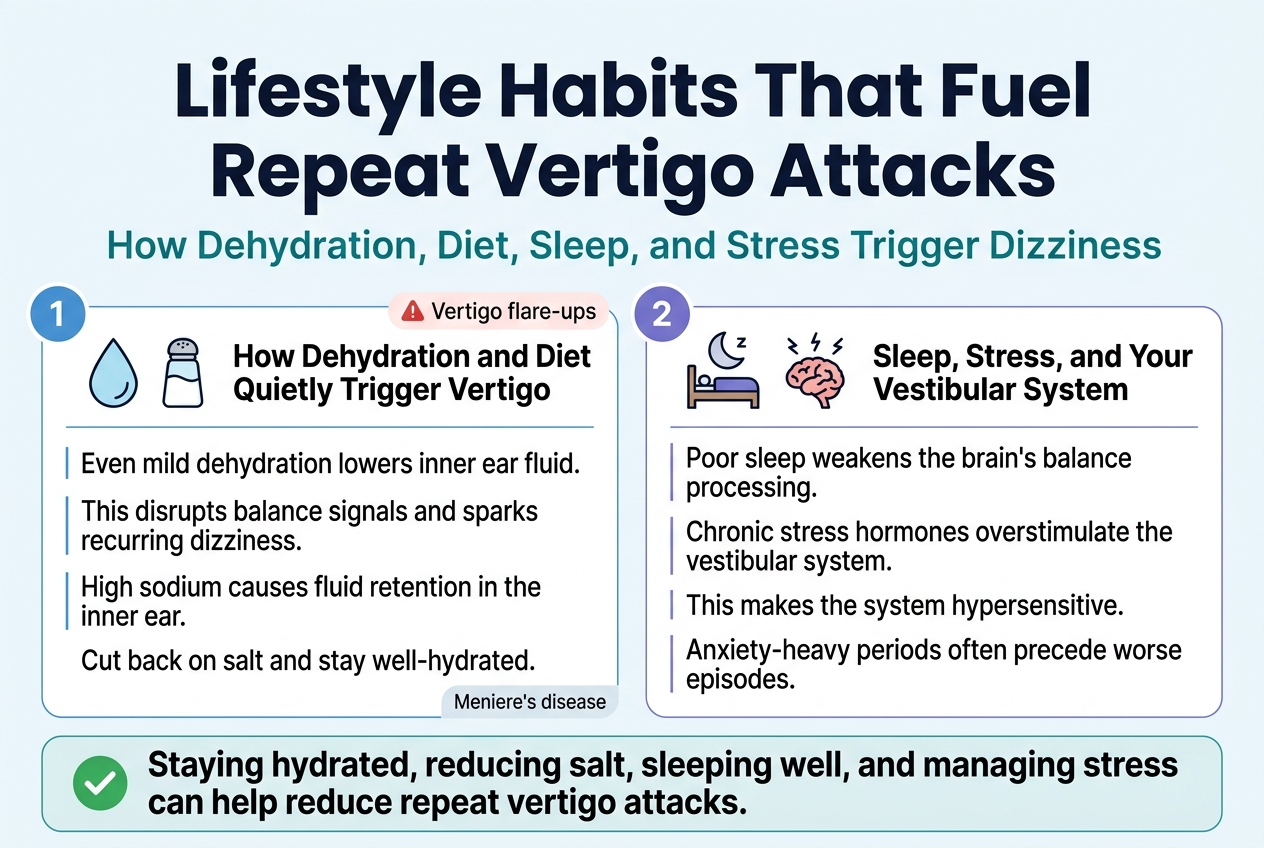
How Dehydration and Diet Quietly Trigger Vertigo
Even mild dehydration reduces fluid levels in the inner ear, disrupting balance signals and sparking recurring dizziness. A high-sodium diet worsens this by causing fluid retention in the ear — a key driver of Vestibular Disorder flare-ups, especially in Meniere’s disease. Cutting back on salt and staying well-hydrated can meaningfully reduce attack frequency.
Sleep, Stress, and Your Vestibular System
Poor sleep and chronic stress are underrated vertigo triggers. Sleep deprivation weakens the brain’s ability to process balance signals, while stress hormones overstimulate the vestibular system, making it hypersensitive. Patients seeing a Neurologist in Bhavnagar often report that anxiety-heavy periods directly precede their worst episodes of Recurring Vertigo.
Medical and Physical Factors That Increase Relapse Risk
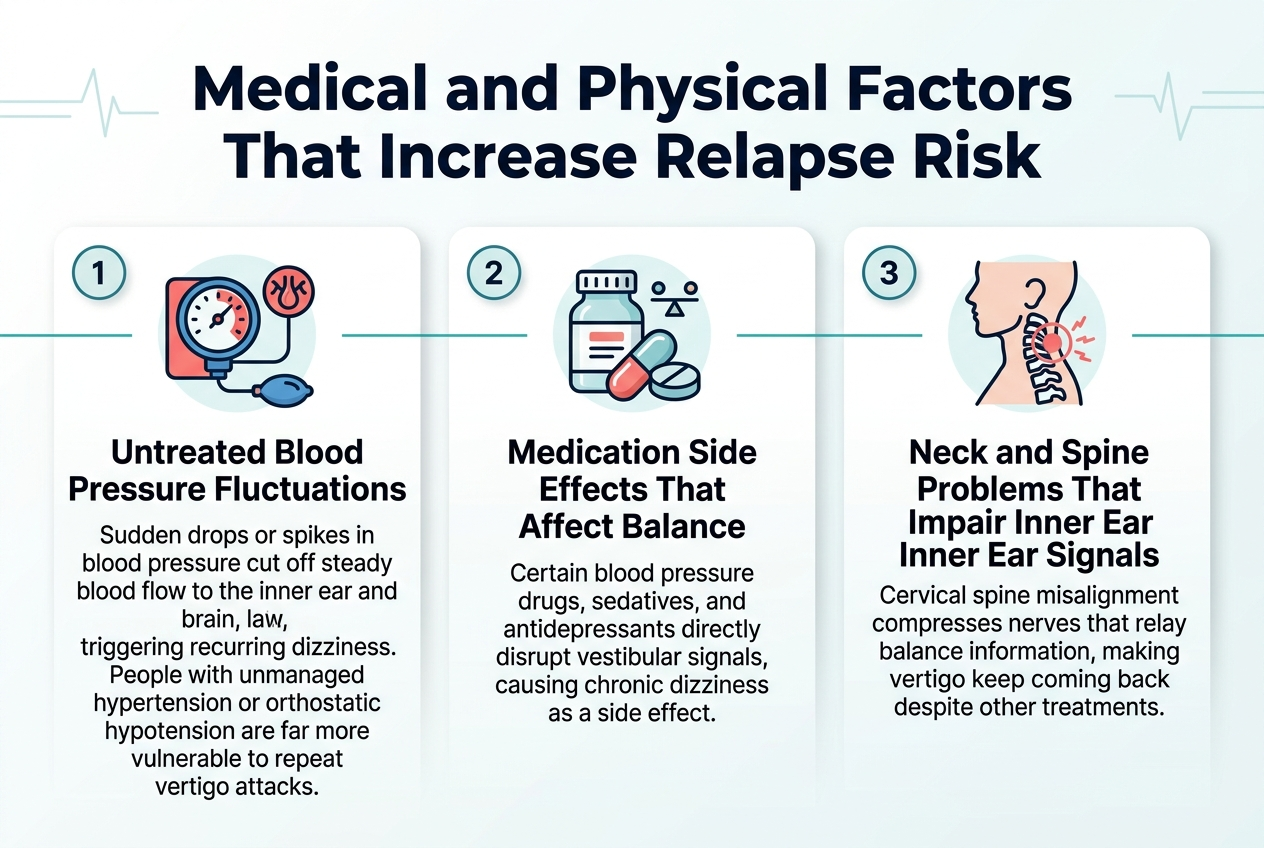
Untreated Blood Pressure Fluctuations
Sudden drops or spikes in blood pressure cut off steady blood flow to the inner ear and brain, triggering recurring dizziness. People with unmanaged hypertension or orthostatic hypotension are far more vulnerable to repeat vertigo attacks.
Medication Side Effects That Affect Balance
Certain blood pressure drugs, sedatives, and antidepressants directly disrupt vestibular signals, causing chronic dizziness as a side effect.
Neck and Spine Problems That Impair Inner Ear Signals
Cervical spine misalignment compresses nerves that relay balance information, making vertigo keep coming back despite other treatments.
Why Incomplete Treatment Leads to Ongoing Vertigo
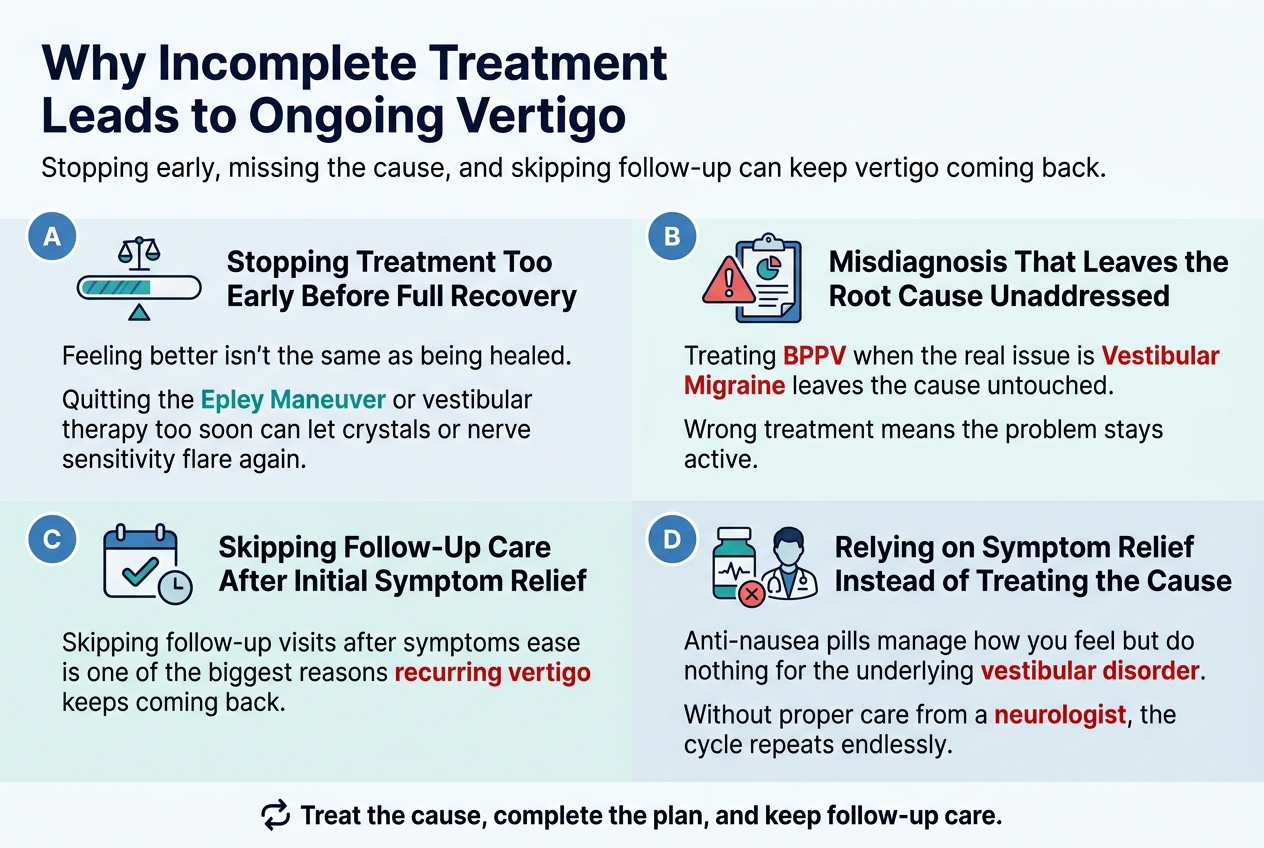
A. Stopping Treatment Too Early Before Full Recovery
B. Misdiagnosis That Leaves the Root Cause Unaddressed
Many people stop #VertigoTreatment the moment dizziness fades — but feeling better isn’t the same as being healed. Quitting the #EpleyManeuver or vestibular therapy too soon means displaced crystals or nerve sensitivity can easily flare again. Misdiagnosis makes things worse; treating #BPPV when the real issue is #VestibularMigraine keeps the root cause completely untouched.
C. Skipping Follow-Up Care After Initial Symptom Relief
D. Relying on Symptom Relief Instead of Treating the Cause
Skipping follow-up visits after symptoms ease is one of the biggest reasons #RecurringVertigo keeps coming back. Anti-nausea pills manage how you feel but do nothing for the underlying #VestibularDisorder. Without proper care from a #Neurologist, the cycle just repeats itself endlessly.
Effective Strategies to Reduce Vertigo Recurrence
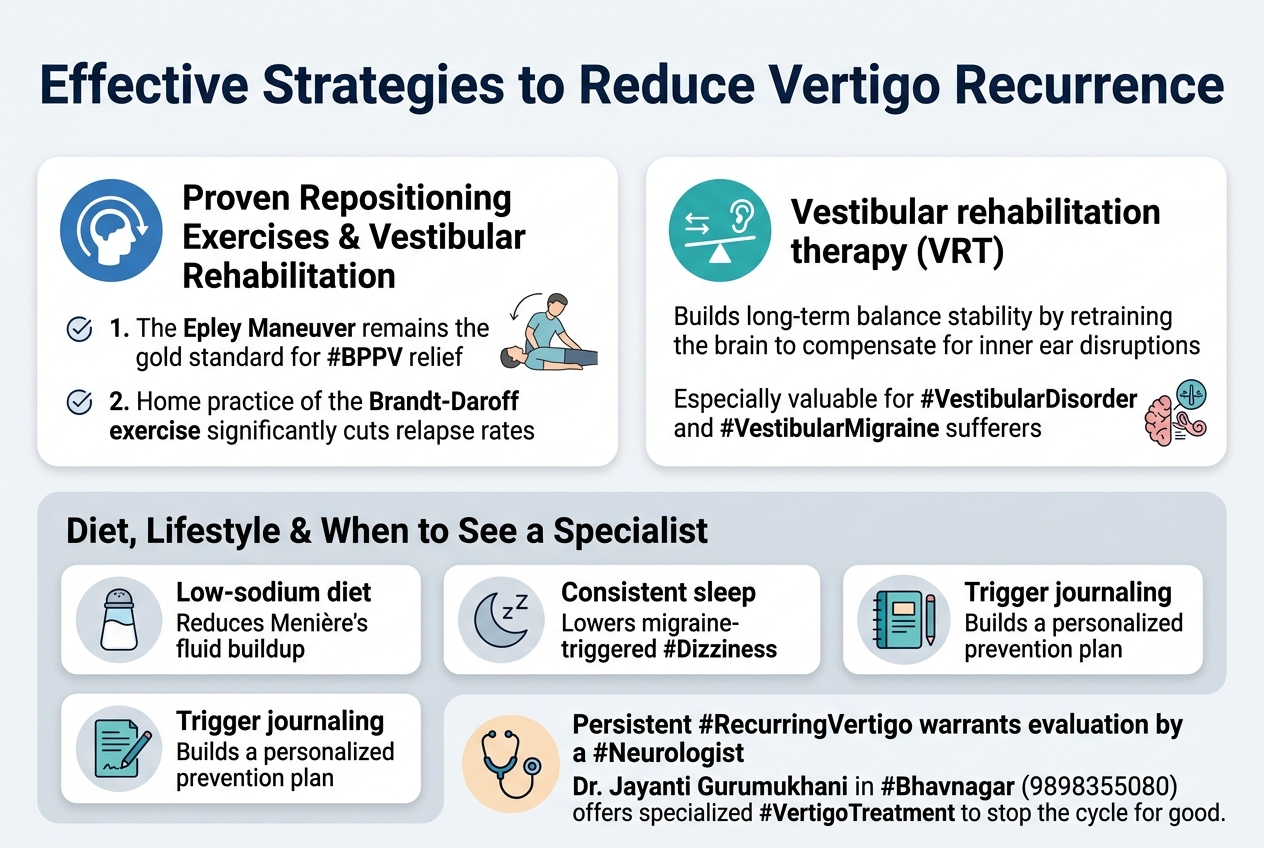
Proven Repositioning Exercises & Vestibular Rehabilitation
The Epley Maneuver remains the gold standard for #BPPV relief, with home practice of the Brandt-Daroff exercise significantly cutting relapse rates. Vestibular rehabilitation therapy (VRT) builds long-term balance stability by retraining the brain to compensate for inner ear disruptions — especially valuable for #VestibularDisorder and #VestibularMigraine sufferers.
Diet, Lifestyle & When to See a Specialist
| Strategy | Benefit |
|---|---|
| Low-sodium diet | Reduces Menière’s fluid buildup |
| Consistent sleep | Lowers migraine-triggered #Dizziness |
| Trigger journaling | Builds a personalized prevention plan |
Persistent #RecurringVertigo warrants evaluation by a #Neurologist. Dr. Jayanti Gurumukhani in #Bhavnagar (9898355080) offers specialized #VertigoTreatment to stop the cycle for good.
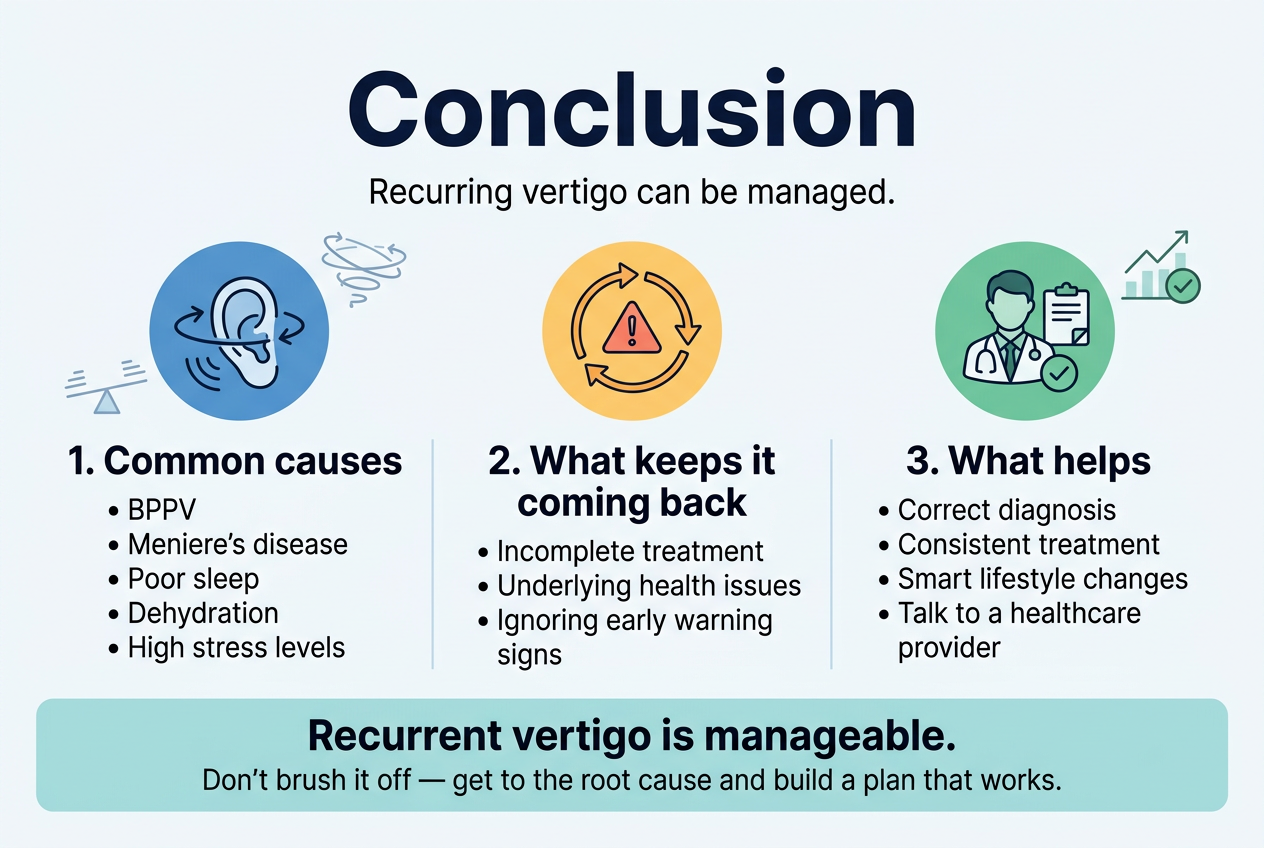
Recurring vertigo can feel frustrating, especially when you think you’ve got it under control and it shows up again out of nowhere. From conditions like BPPV and Meniere’s disease to everyday habits like poor sleep, dehydration, and high stress levels, there are plenty of reasons why vertigo keeps finding its way back. Incomplete treatment, underlying health issues, and ignoring early warning signs also play a big role in keeping the cycle going.
The good news is that recurrent vertigo is manageable. With the right diagnosis, consistent treatment, and a few smart lifestyle changes, you can significantly cut down how often these episodes happen. If vertigo keeps coming back for you, don’t brush it off as just a bad day — talk to a healthcare provider who can get to the root cause and help you build a plan that actually works.